 EN
EN

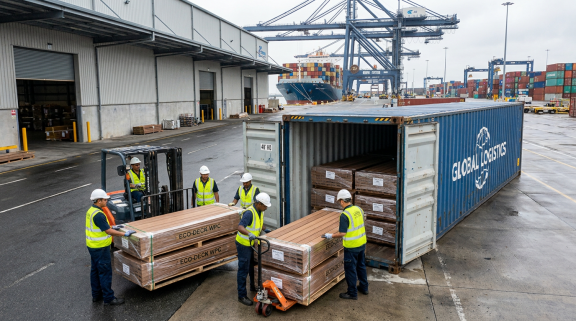
Introduction: The Saudi Construction Boom and WPC Demand
Saudi Arabia is currently witnessing an unprecedented construction boom. Under the umbrella of Vision 2030, "Giga-projects" like NEOM, The Red Sea Project, Qiddiya, and Diriyah Gate are creating a massive vacuum for high-quality, sustainable building materials. Wood Plastic Composite (WPC) decking, cladding, and pergolas have become the preferred choice for these projects due to their ability to withstand the harsh desert climate while aligning with the Kingdom’s sustainability goals.
However, for a Saudi distributor or contractor, wpc importing saudi arabia is not as simple as placing an order and waiting for the ship to arrive. The Saudi Food and Drug Authority (SFDA) and the Saudi Standards, Metrology and Quality Organization (SASO) have implemented some of the world's most rigorous import regulations.
Failure to comply with the SABER platform or missing a SASO Certificate of Conformity can lead to shipments being stuck in Jeddah or Dammam ports for weeks, resulting in heavy demurrage charges—or worse, total rejection and re-export at the importer's expense. This guide breaks down the 2026 requirements for a successful WPC import operation.
The SABER Platform: The Gatekeeper of KSA Imports
Since 2019, the SABER platform has replaced the old paper-based SASO certification system. SABER is an online portal that facilitates the issuance of Certificates of Conformity for consumer products.
For WPC products, which fall under the category of Building Materials, the process involves two distinct stages:
- Product Certificate of Conformity (PCoC): This is valid for one year. It requires the manufacturer to provide test reports (such as ASTM or EN standards) and for an accredited Certification Body (CB) to verify the factory's quality management system.
- Shipment Certificate of Conformity (SCoC): This is required for every single shipment. It is issued based on the valid PCoC and specific invoice details for that container.
At Naturwing (Hangzhou Feihuang Industry Co., Ltd.), we maintain an active database of the latest SASO technical regulations. We work closely with major CBs like Intertek, SGS, and TUV to ensure our Saudi clients can generate their SCoC within 48 hours of the shipment departing China.
HS Codes and Customs Duties in Saudi Arabia
Correct classification is the first step in avoiding customs delays. For WPC decking and cladding, the most common HS codes used in KSA are:
|
Product Type |
Recommended HS Code |
KSA Duty Rate (Est.) |
|
WPC Decking (Flooring) |
3918.90.90 |
5% - 15% |
|
WPC Wall Cladding |
3925.90.00 |
5% - 12% |
|
WPC Fencing/Pergolas |
3925.20.00 |
5% - 12% |
Note: Duty rates in Saudi Arabia can fluctuate based on local industry protection policies. Always verify the current rate via the Zakat, Tax and Customs Authority (ZATCA) portal.
Additionally, a 15% Value Added Tax (VAT) is applied to the total landed cost (CIF value + customs duty).
Labeling and Packaging: The "Country of Origin" Rule
Saudi Customs is notoriously strict about labeling. Every single piece of WPC board or every individual package must have a permanent "Made in China" mark.
- Ink-jet printing: We print "Made in China" on the side or back of each board.
- Engraving: For some profiles, we can engrave the origin directly into the mold.
- Packaging: The outer pallet wrap must have a clear label in both Arabic and English indicating the product name, manufacturer (Hangzhou Feihuang Industry Co., Ltd.), dimensions, and quantity.
If the "Made in China" mark is only on a removable sticker or only on the outer pallet, Saudi customs may fine the importer or demand that the entire container be re-labeled inside the port—a process that is both expensive and time-consuming.
Honest Negative: When Importing WPC to Saudi Is NOT Advisable
While Saudi Arabia is a high-growth market, we advise against importing WPC in these specific contexts:
- Small Residential Projects (DIY): If you are an individual villa owner looking to buy 50㎡ of decking, the cost of SABER registration (approx. USD 500-800 per year) and the minimum sea freight charges make a direct import from China financially non-viable. You are better off buying from a local Saudi distributor who has already cleared the material.
- Ultra-Low-Cost "Recycle-Heavy" Specs: In the 55°C heat of Riyadh, low-quality WPC with high recycled-filler content will warp and crumble. If your budget only allows for the cheapest possible unbranded WPC, do not import it to Saudi. The reputational risk of a failed project in this high-accountability market is too great.
- Strict "Non-Combustible" Requirements: For certain government-funded indoor public spaces in KSA, only A1 non-combustible materials are permitted. WPC is B1-rated. Do not attempt to "force-fit" WPC into a spec that demands A1 fire rating.
Logistics: Jeddah vs. Dammam vs. King Abdullah Port
Choosing the right port can save days of transit time and hundreds of dollars in trucking.
- Jeddah Islamic Port (JIP): Best for projects in Mecca, Medina, and the Western region. It is the busiest port and has the most frequent connections from Ningbo/Shanghai (approx. 22-26 days).
- Dammam (King Abdulaziz Port): Ideal for projects in the Eastern Province (Al Khobar, Dhahran) and Riyadh. Transit is slightly longer (28-32 days) but provides closer proximity to the capital.
- King Abdullah Port (KAP): A newer, high-tech port in Rabigh. It often offers faster customs clearance for large industrial importers.
At Naturwing, we provide 7-Day Fast Shipping for samples and small trial orders via air freight to RUH (Riyadh) or JED (Jeddah) so you can close your project contracts faster.
The Role of the Manufacturer in Your Success
A manufacturer isn't just a producer; they are your compliance partner. When choosing a supplier for the Saudi market, ask these 3 questions:
- "Have you registered any products on the SABER platform in the last 6 months?"
- "Can you provide a SASO-compliant test report for UV resistance at 50°C+?"
- "Will you provide a dedicated Arabic-speaking or KSA-market-specialist account manager?"
Naturwing (Hangzhou Feihuang) has 28 years of experience, and we have been serving the Saudi market since the early 2010s. We understand the cultural and regulatory nuances that make KSA unique.
Frequently Asked Questions
Q1: How much does the SABER PCoC certificate cost? The government fee is 500 SAR per category, plus the Certification Body (CB) fee which typically ranges from USD 300 to USD 600 depending on the complexity of the product and the testing required.
Q2: Is a factory audit required for Saudi WPC imports? For "Type 1a" certification (standard Building Materials), a full factory audit is not always mandatory every year, but the CB will require valid ISO9001 certification and recent laboratory test reports from an ISO 17025 accredited lab.
Q3: Can I import different colors of WPC decking under one SABER certificate? Yes, as long as the base material, profile design, and manufacturing process are the same, multiple colors can typically be grouped under one PCoC.
Q4: How long does customs clearance take in Saudi Arabia? With a valid SCoC and pre-filed documentation, clearance at Jeddah or Dammam can be completed in 3-5 business days. Without proper SABER documentation, it can take weeks.
Q5: What is the current VAT rate for building materials in KSA? The standard VAT rate is 15%. This is paid at the point of entry along with customs duties.
Conclusion & Next Step
Importing WPC to Saudi Arabia is a high-reward venture for those who respect the rules. With the Kingdom’s "Giga-projects" accelerating, the demand for high-performance, SASO-compliant decking and cladding is only going up. By partnering with a manufacturer like Naturwing that understands the SABER platform and Saudi labeling requirements, you can focus on winning contracts rather than fighting customs.