 EN
EN

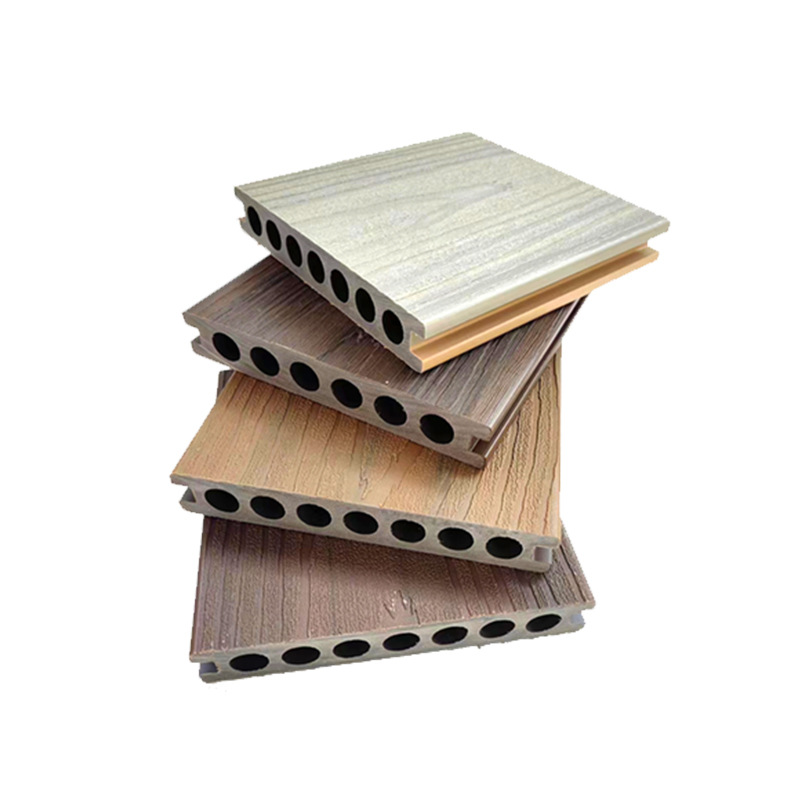
The Distinction of WPC Decking Regarding Sun Exposure and Color Preservation
Photodegradation is addressed via careful WPC decking construction. Unlike wood products, all modern wood composites contain technologically advanced additives to keep color from fading.
How UV Absorbers and Hindered Amine Light Stabilizers Work
Unlike other products, WPC uses UV absorbers and HALS that change UV light into heat. Hindered Amine Light Stabilizers work to remove free radicals and prevent chemical breakdown. This system protects from surface erosion up to 80% and retains the color and structural integrity of the material.
Color Preservation and Stability Issues
Color fading is avoided due to the integration of titanium dioxide and carbon black. This is due to carbon black’s ability to absorb UV light. This is in addition to photodegradation prevention and occurs from the uniformity of the dispersal of pigment particles. Nitrogen, besides the other ingredients WPC has to offer, retains color for up to a 5-year period, and the system is recession resistant. Almost all of the fading pigment of wood is protected against oxidative color loss during the polymerization reaction.
Dimensional Stability: The Resistance To WPC Decking Warping, Cracking and Swelling
Control of the moisture, driven mostly by the Polymer Matrix, is achieved by the Fiber-Polymer Interlocking Matrix
WPC Decking is known for its great dimensional stability as a result of its advanced composite construction. The wood fibers are fully enclosed in a thermoplastic polymer matrix. The result of this construction is a polymer matrix interlocking, and the pathways of the absorption of moisture are being restricted. The result of this construction is a polymer matrix interlocking and the pathways of the absorption of moisture are being restricted. In the industry, the WPC materials being tested are, for everything that is between 0.5% and 3–8% of movement a wood, linear expansion from negative 0.5% of a 48-hour water immersion. In all 48 hours, wood products, the criteria are 24–10% of movement.
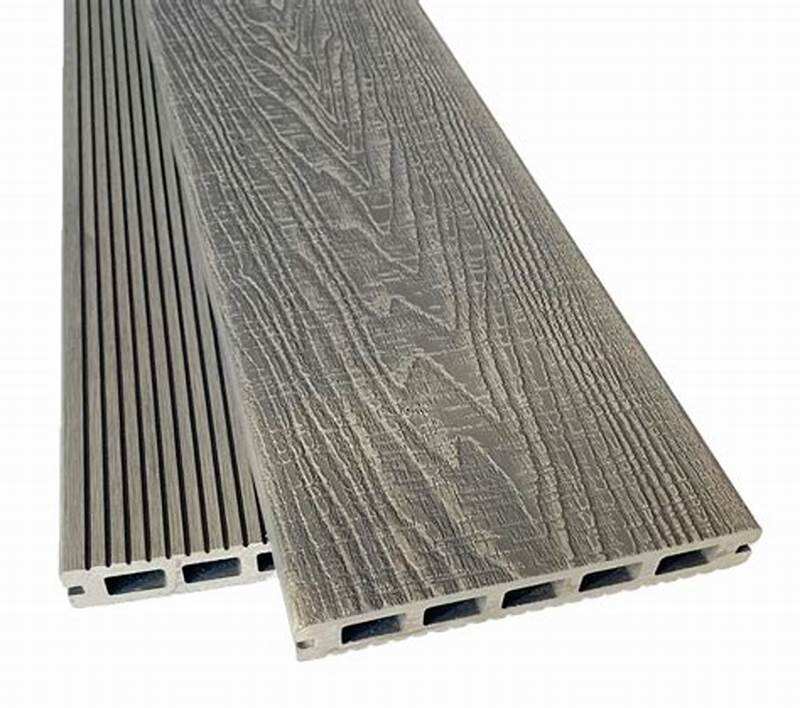
Thermal Cycling: How Thermoplastic Binding Prevents Deformation
The thermoplastic binders in the WPC Decking supply the flexibility that is critical when temperatures fluctuate. The binders not only expand and contract as the temperature changes, but the thermoplastic binders also absorb the change in temperature and, therefore, the change in strain. This is the cumulative strain and the change in the molecular strain occurs inside the wood and the molecular strain is not proportional to the change in the wood. The result is a cumulative strain, which is being transformed, and the loss of structural integrity of the wood is not occurring in the wood. The result is the closure of the wood. The result of the closure is the loss of structural integrity of the wood and the result of the
Stability Factor WPC Decking Traditional Wood
Moisture Expansion 0.5% 3%–8%
Thermal Deformation 2% 5%–12%
Crack Resistance High (polymer absorption) Low (fiber brittleness)
Validation of WPC Decking Process
Appearance of Real Life and Laboratory Tests
ASTM D6662 Accelerated Testing vs. Multi-Year Direct Testing
EXT Testing (the laboratory test based on ASTM D6662)representing Several Decades of Weathering and Rapidly Accelerated Time, Results Tests Rapidly Given 2,000 Hours of Extreme UV, Moisture, and Thermal Cycling. Results Consistently Show Less than 3% of Deformation and Minimal Color Change (ΔE < 5). Field Studies Have Documented Decks Remain Structurally Sound, Even in Extreme Environments, With Little Change. Less than 0.5% of Coastal Wood Absorbs Moisture vs. 15%–20% Absorption Coastal Decking. This Decreased Metric e Compared WPC Decking Performance to Real Life Testing, and High Absorbance h Decking.
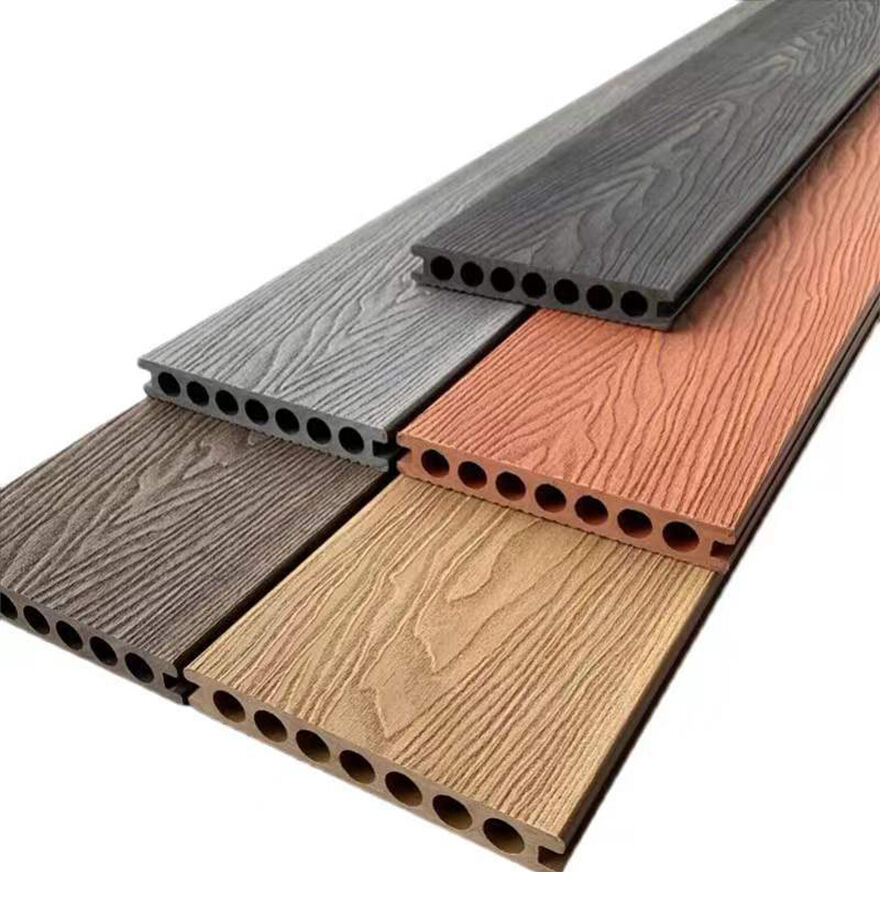
Next-Gen Additives Push WPC Decking Further
WPC decking uses cutting-edge additives to address multiple ways of degradation. The specific developments are as follows:
- Coupling agents provide molecular-level bridging between wood fibers and polymer matrices. Coupling agents decrease moisture absorption by 30-40% over early versions.
- Hindered amine light stabilizers (HALS) neutralize free radicals formed by UV accidents on surfaces.
- The next generation of additives discourages thermal oxidation and even maintains flexibility at outdoor temperatures of as low as –20 °C.
- Nano-scale mineral fillers discourage thermal expansion and contraction of WPC decking in extreme weather.
ASTM D6662 accelerated weathering. serve as laboratory proof for the durability of the next-gen additives. The next-gen additives are able to maintain over 90% of the flexural strength of WPC decking after 5,000 hours of exposure to the elements. The advancements in materials science provide a fade resistance and dimensional stability warranty extending over 25 years.
Frequently Asked Questions
How do UV inhibits WPC decking?
Ultraviolet (UV) HAsl together with UV absorbers work to deter egress and UV damage by challenging free radicals and suppressing erosion to surfaces.
What contributes to thermal dimensional stability of WPC decking?
fiber-polymer matrix confines moisture uptake and retention to under 1% and limits dimensional instability due to environmental conditions.
Is WPC decking a good fit for regions with extreme conditions?
Yes, next-gen additives with advanced formulations ensure WPC decking maintains structural integrity to extreme UV exposure, moisture, and thermal cycling for decades.
How long will the color of WPC decking last with sun exposure?
With spectral filtering and stabilized pigments, color fade of WPC decking is most often indistinguishable (≤0.5 ΔE/year).