 EN
EN

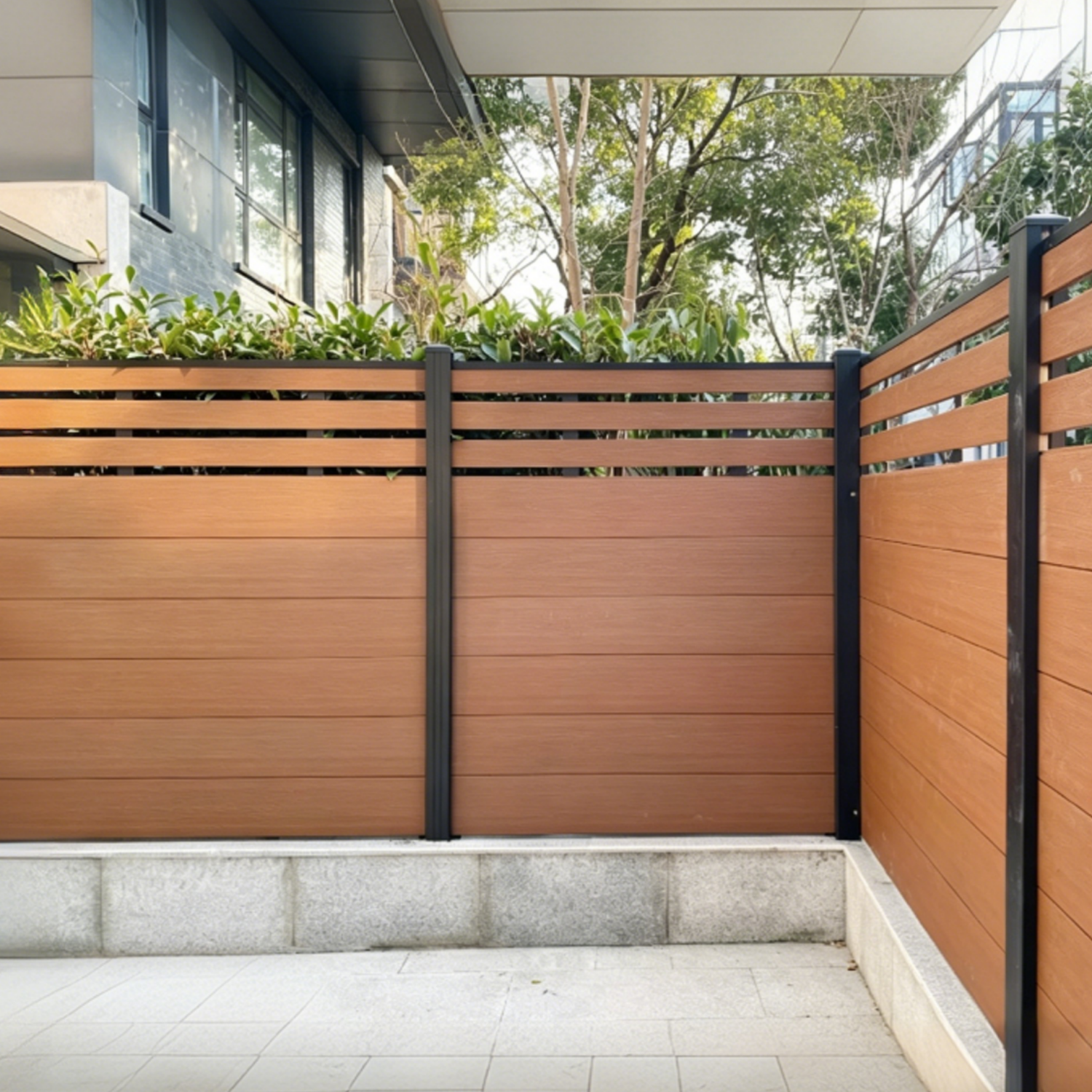
Ease and DIY affordability is what composite fencing offers.
Installing a Composite Fence
Composite fencing is less complicated than its wooden counterpart, making it more approachable for DIYers with basic knowledge and tools. Preparation is required before an installation begins. First, clear out the area, and use stakes/strings to mark the boundary line. Next, position the posts so that they are 6 to 8 feet apart (standard panel widths). Each post hole should be 24 to 36 inches deep, in accordance with the local frost depth. After placing the post and leveling it with the 4ft level, backfill the hole with fast-setting concrete and a drainage gravel base. Allow the concrete to set for up to 48 hours. Meanwhile, you can attach the composite panels with screws or hidden clips, both of which do not require a pilot hole to be made. Clips cannot split the composite. Post caps are used to provide a colored finish and protect against weather. This installation will save you installation time due to shortened panel designs and preconstructed elements. Compared to its wooden counterpart, a composite fence can take up to 30% less time to install. Most installations can be completed in a weekend.
Preparation is more important than specialization. Here are some important tools and items to have on hand for composite fencing. The tools are rubber mallets for panel adjustments, post hole diggers and augers, a 4-foot level, a power drill with screw driver bits, and circular saws with blades that cut composite. The list of items includes composite fence panels and posts, fast-setting concrete mix, drainage gravel, screws or clips that resist corrosion, and post caps. Composite fencing kits come with pieces that are already cut and color coordinated, along with the required hardware. This way, measurement mistakes and material losses are avoided. Composite fencing’s special density means users don’t need to worry about mistakes. This saves users time and the effort of pre-drilling holes. Since a helper is needed only for large panels, no other special equipment or training is necessary. The Fencing Standards Institute found that, as a result of not hiring contractors for the work, homeowners save $740 on average in a single year.
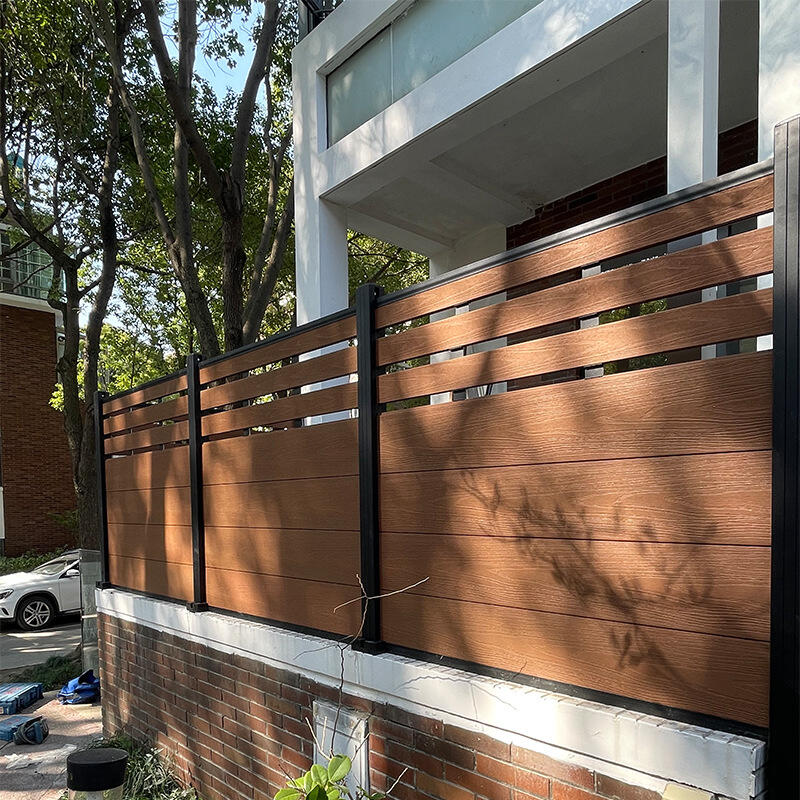
Composite Fencing Repair and Maintenance: Minimal Effort, Maximum Durability
Composite Fencing Maintenance
Composite fencing is fairly easy to maintain. With just a couple cleans a year with some mild soap and water, you can get rid of just about any surface dirt and most of the organic buildup you tend to find on fencing. When cleaning, do not use cleaning products that may be more abrasive, such as solvents, or even those annoying high-pressure washers, as they may harm the protective cap stock. You should also do a simple inspection in the fall and spring of each year. Look for any loose hardware, or even some shifts or some light damage that may have occurred to the fence. With composite fencing, you are safe from decay and insects as it has short cellulose, and composite is not susceptible to moisture. As a result, there is no need to sand, seal, stain, or apply any insecticide to your fencing. Annual maintenance is fairly low, usually in the range of $0.05 to $0.15 each foot, and a 150 foot fence will be less than $25.
What are the Most Common Composite Panel and Post Damage and are Repairing Them Equally Practical?
True failures with a composite fence are also very uncommon; additionally, in the rare case that you may need to provide practical solutions, they are quite simple. You can buy certain kits directly from the manufacturer that will help repair scrapes and scratches. If you have a minor scratch that has shifted any of the panels, that can be repaired just by making sure to use corrosion-resistant fasteners. Many accidents or even some natural impacts like falling branches can easily damage a fence. In this case, each of the boards or even modules can be easily replaced in the same way. Composite fencing is a long term investment and your fencing will not easily drop in value, as they believe that their products need to be replaced from 25 to 30 years.
Why Composite Fencing is Resistant to Rot, Warping, Insects, and Weather
Composite fencing is created from several materials that…chose to provide the customers/fence with a durable product. The moisture stops rotting by fungi, and by products that decay due to moisture otherwise will decay or rot…this product is good for coastal/humid environments. The absence of the bugs’ food…termite’s and Carpenter Bees. Therefore, to get long durable fencing, no chemical treatment is needed. Warping, cracking, and checking will not be an issue…Meanwhile, improper fencing is flexible during expansion and contraction. Solid wood is not a good product. Unlike solid wood, Composite solid wood does not soften due to heat. This means it is not only durable but safe due to insects as well. The wood does not embrittle and it does not warp. Not only insects, but the heat, and the cold will not warp the wood. This combination means Fewer services and fast repairs.
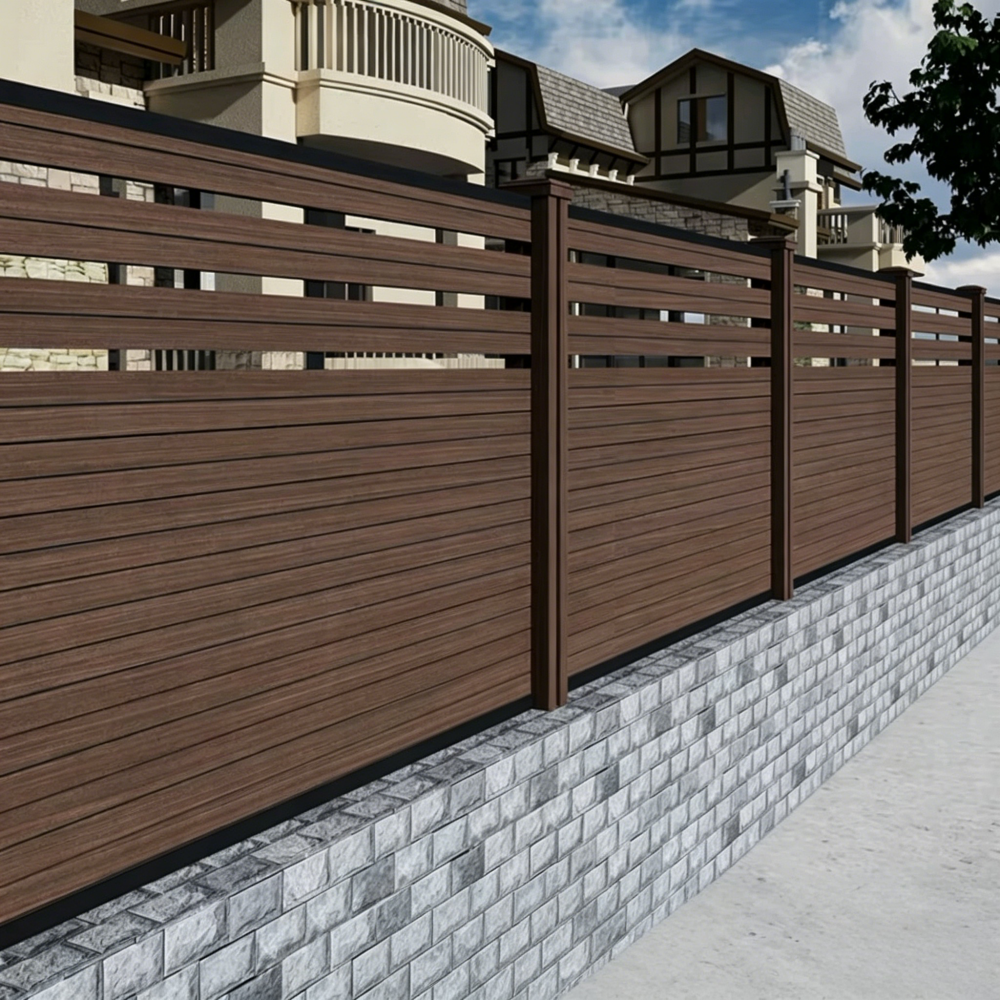
Composite Fencing or Traditional Fencing: Comparison of Ease of Use and Cost of Ownership
Time and cost savings of installation compared to traditional wooden and vinyl fencing
Composite fencing is approximately 30% faster to install than pressure-treated wood due to having panel dimensions and built-in mounting systems, as well as no need for finishing on site. Crews can complete 150 feet of fencing in one to two days compared to three to four days for cedar and redwood. Composite contains no wood and therefore requires no sanding, priming, staining or sealing during installation. Unlike vinyl, composite provides more strength and performance and maintains sightlines better by resisting wind deflection. Although some advantages in installation and performance are offered by vinyl, vinyl surfaces do not display the warmth and character of composite wood because of the absence of irregularities in the vinyl product.
Lifetime costs: Initial costs versus costs for repairs and replacements
Total installation cost for pressure-treated pine fencing is approximately $30-$60 per linear foot. Composite fencing is approximately 40% higher in dollar manufacturer cost, but almost no lifetime costs are associated with composite wood. In comparison to traditional wood, which requires maintenance and incurring costs of $500 - $1,200 for staining, rot repairs and pest control on an annual basis, composite wood requires almost no maintenance over its lifespan of 15 years. Costs for ownership are therefore approximately 40% lower than comparable systems. Maintenance costs for vinyl fencing are similar to composite, but due to vinyl's brittleness in cold climates, panels frequently need to be replaced. Quality composite fencing lasts 25-30 years and is backed by the manufacturer to remain virtually unchanged over time.
FAQs
Q: How beginner-friendly is composite fencing installation?
A: Composite fencing is ideal for beginners as it requires only basic tools. The panels are designed to interlock, and the components are pre-engineered, making the process easy even for those with no prior experience.
Q: What are the maintenance requirements for composite fencing?
A: Composite fencing requires a bit of maintenance. It needs to be cleaned with soap and water about two times a year, inspected for damage, and the hardware tightened if necessary.
Q: What is the cost of composite fencing compared to wood and vinyl?
A: Composite fencing costs more upfront at approximately $30-$60 per linear foot, but in the long run, you'll save more because the upkeep and repair costs are lower compared to wood and vinyl.
Q: Can composites be repaired if the panels are damaged?
A: Yes, damaged panels and boards can be repaired and easily replaced with standard fasteners without having to take apart the sections next to them.
Q: Will composite fencing be damaged by rot or insects?
A: Yes. Wood fencing and vinyl fencing are susceptible to rot, but not composite fencing because it doesn't absorb moisture and it doesn't have cellulose which attracts wood-boring insects.