 EN
EN

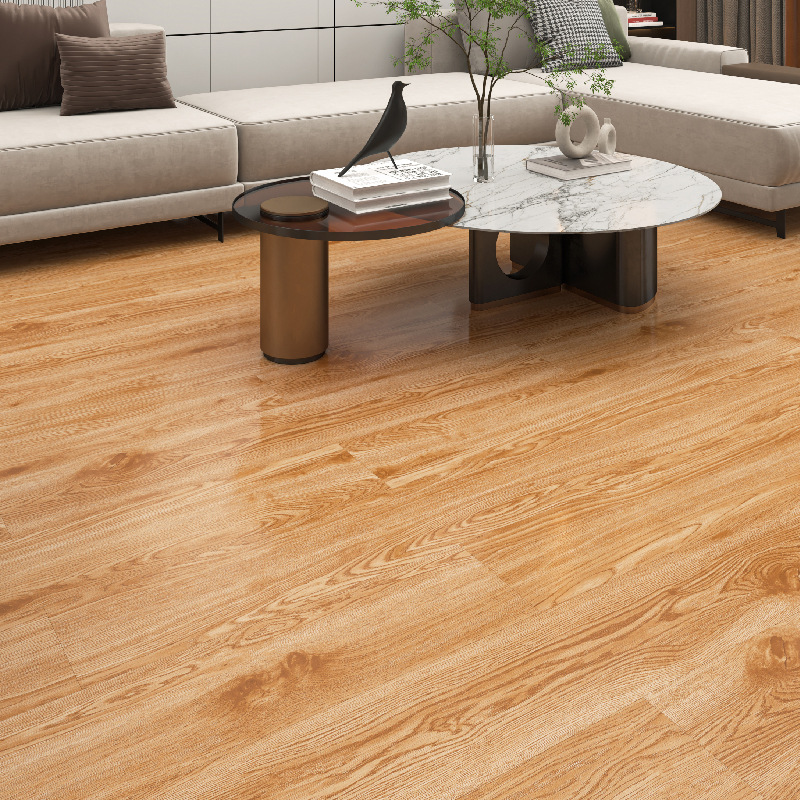
Clarifying ‘100% Waterproof’ Claims in Rigid Core Flooring: A Balance of Material Structure and Installation Limitations
The Core Layer, Impression of the Top Layer and the Measured Integrity of the Locking System: Understanding Waterproofing
Three different construction methods are used to allow rigid core flooring to provide a waterproof function. Its core—often limestone powder fused with polymer stabilizers—forms a dense, hydrophobic structure that resists liquid. Independent testing demonstrates full water immersion for over 72 hours has resulted in no measurable swelling. Above this, a UV-cured wear layer creates a seamless barrier that is non-porous, and protects against moisture and staining. The locking system uses precision-milled tongues and grooves that interlock under tension, and creates water-resistant seams when installed with ≤0.004" gap tolerances. This combination—core, surface and seams—provides the required performance that is expected for wet areas of the building where the other flooring products do not function.
The Limitations of Waterproofing Subfloors, Gaps at the Edges and Improper Expansion Gaps
The core system reinforcement of moisture does not overcome the limitations that result from the Locking System issues. Concrete subfloors that emit moisture vapor in excess of 3 lbs/1,000 ft²/24 hrs (as per ASTM F1869) may cause damage to the moisture-proof adhesive and ‘whitening’ to the back of the boards, Even with moisture-proof cores, this applies. Gaps greater than 1/4" from walls or cabinetry where moisture can stand will cause the locking system to absorb moisture. This is the primary cause of the swelling that is commonly found in the locking system in bathrooms and similar places. That a gap of less than 1/4" for every 10 linear feet of locking system is to be provided to allow clearance for thermal expansion of the locking system. Failing to provide these gaps will result in the locking system rupturing the moisture-proof adhesive. Recent studies have demonstrated that 58% of these system failures are due to these installation shortcomings.
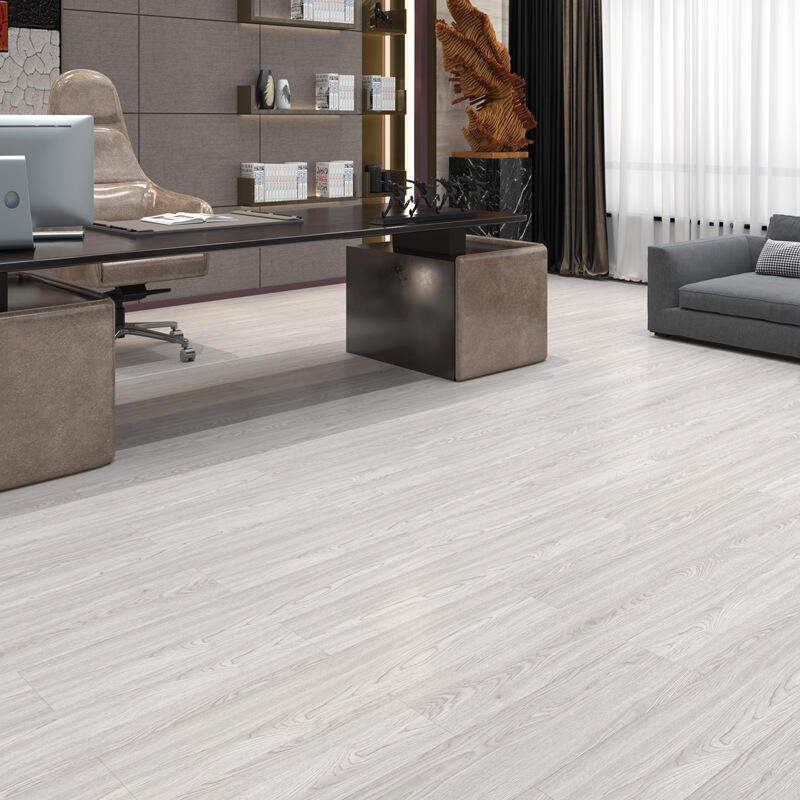
Rigid Core Flooring Stability Explained: How SPC and WPC Cores Deliver Dimensional Consistency
SPC vs. WPC: Thermal Expansion Rates, Dent Resistance, and Real-World Performance Under Load
The ultra-dense core formulation of Stone Plastic Composite (SPC) combines limestone and PVC to minimize dimensional changes. Independent testing reveals SPC has .05% expansion at 85°F and 85% humidity during testing. The same conditions caused Wood Plastic Composite (WPC) to expand between .08% and .12%. Dent resistance and core density carry the same benefits. SPC flooring has an F1914 score of 85 lbs./in² and is 43% better than WPC flooring, which has a score of 60 lbs./in² and is less appropriate for commercial use.
Attribute SPC Flooring WPC Flooring
Core Composition Limestone + PVC Wood Fiber + Polymer
Thermal Expansion ≤ 0.05% 0.08–0.12%
Dent Resistance High (85 lbs/in²) Moderate (60 lbs/in²)
ASTMs D1037 & D2047: Evaluating Dimensional Stability and Slip Resistance in Commercial and Residential Flooring
ASTM D1037 evaluates the resistance of a solid flooring material to dimensional changes after exposure to an environment of 90% relative humidity for 72 hours. For rigid core flooring to be in compliance with the standard, the flooring is required to have edge swelling of ≤0.01 inches. WPC performs at 0.009”, whereas SPC performs at an average of 0.006”. For testing of slip resistance, ASTM D2047 states that a level flooring material shall have a DCOF of at least 0.42. Rigid core flooring products in the market have DCOF scores that range from 0.45 to 0.55, thus making them compliant with the ADA flooring safety requirements for areas such as kitchens and retail segments.
Rigid Core Flooring in High-Moisture Areas: Performance in Bathrooms, Basements, and Kitchens
Case Study: Basement Installations with Concrete Subfloors and Moisture Vapor Emission Rates (MVER) of 5 lbs/1,000 ft²/24 hrs Over a 12-Month Period
This study tracked 45 basement installations for 12 months. Installations had concrete subfloors and MVER levels up to 5 lbs/1,000 ft²/24 hrs. No warping, mildew, or bonding failure of the flooring occurred. The failure resistance is due to the flooring's composite core and locking mechanisms that provide a moisture seal and barrier to intrusion. The moisture seal and barrier remain intact even in extreme humidity and moisture exposure (Environmental Testing Agency, 2023). Other important points include:
All moisture related issues were due to excessive gaps left between the flooring and the walls, which violated the recommended (by ASTM) maximum spacing provisions for relief or expansion gaps, not due to absorption by the core of the flooring.
In 92% of the installations, the flooring maintained stability within tolerances of 0.05% even in the presence of extreme temperature changes.
There was no deterioration of the flooring finishes due to the flooding that had occurred in the affected below grade areas.
The results of this study demonstrate the efficacy of rigid core flooring options in high moisture areas, provided that the sub-floor gaps, perimeter gaps, and expansion gaps are properly managed.
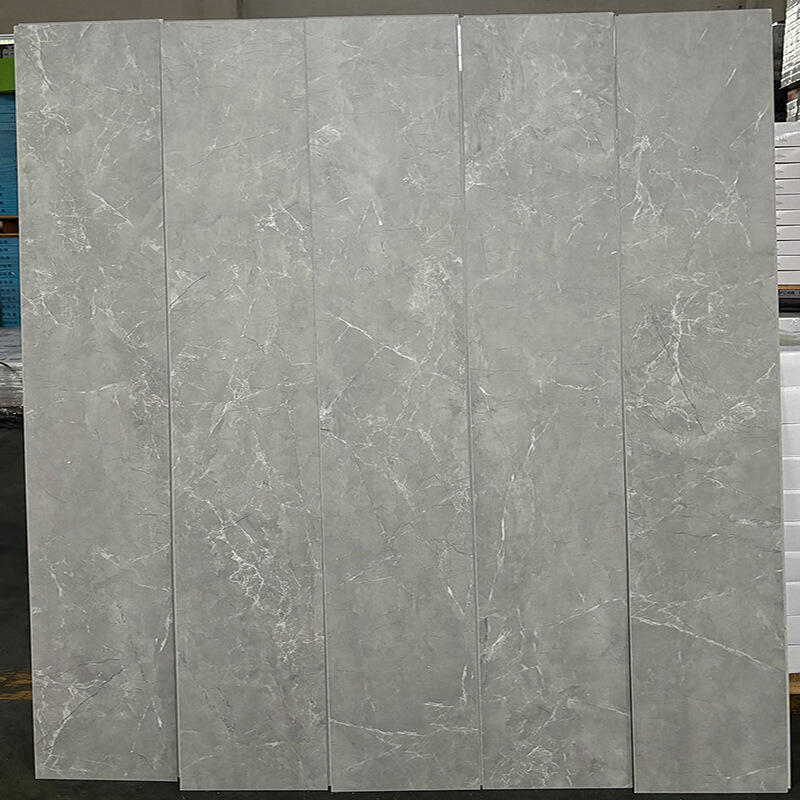
Making the Right Choice: Key Selection Criteria for Long-Term Waterproofness and Stability
Choosing rigid core flooring for its long-term waterproofness and dimensional stability means assessing four interconnected elements and ignoring the marketing pitches. First, core density (kg/m³) values must come first. SPC formulations, with a greater density, sustain indentation (under ASTM F1914) 40 percent better than standard WPC, thus maintaining integrity under a load for longer. Second, technologies for the wear layer must be evaluated. Search for UV-cured coatings with EN 13329 24-hour submersion testing. This proves that coatings will withstand moisture ingress at the joints and edges. Third, installation dictates much of the real-world performance. Thermal expansion rates of over 0.1 percent per °C will require manufacturer-prescribed expansion gaps of 6 to 10mm for every 6m, and failure to adhere to the gaps will yield buckling. Fourth, MVER greater than 3 lbs per 1,000 ft² per 24 hrs in high moisture environments such as basements warrants field performance data to cross-reference ASTM D1037 dimensional stability certifications. Longevity in wet environments depends on rated core composition paired with surface, installation, and end-use assessments, and not any one attribute.
FAQ
What does 100% waterproof rigid core flooring promise?
100% waterproof rigid core flooring offers the ability of the material to repel water and not absorb it, and thus allows for its use where there is water. It is important to note, however, that if there is a gap in the flooring, or if there is moisture in the subfloor, the flooring will be at risk regardless of the waterproofing.
What are the differences between SPC and WPC flooring?
SPC flooring has a dense core, which provides better thermal stability and dent resistance. WPC flooring has a foamed polymer core, which provides less thermal stability and dent resistance, but does provide a more comfortable flooring.
Is rigid core flooring an appropriate choice for installing in moisture-prone areas such as basements?
Yes. Rigid core flooring can be used in moisture-prone areas as long as the proper installation guidelines, including preparation of the subfloor, and provision of expansion gaps, are followed.
Why are ASTM certifications required when choosing rigid core flooring?
ASTM certifications demonstrate that the flooring meets the criteria for dimensional stability and slip resistance in all conditions, thus demonstrating an authenticity assurance in real-life scenarios.