 EN
EN

Meta Description:
Compare vertical slatted, board-on-board, lattice-top, and horizontal composite privacy fencing. Learn their aesthetics, structural performance, low-maintenance benefits, and code compliance.
Introduction
Composite privacy fencing has become the top choice for modern residential and commercial properties, replacing traditional wood with superior durability, UV resistance, and zero routine maintenance. Different slat designs deliver unique aesthetics, privacy levels, wind resistance, and code compliance performance.
This guide breaks down the four most popular composite fence styles, including vertical slatted, board-on-board, lattice-top, and horizontal slat fencing. It covers architectural advantages, engineering performance, thermal expansion control, and real-world installation considerations.
Modern Aesthetics and Architectural Advantages of Vertical Slatted Composite Fencing
Vertical slatted composite fencing features clean, minimalist lines that perfectly match contemporary home architecture. Evenly spaced vertical slats create a neat vertical visual rhythm, lifting the overall exterior structure and making narrow yards feel more spacious.
All fasteners are concealed during installation, delivering a hardware-free seamless surface that coordinates well with modern windows, door frames, and rooflines. Instead of overwhelming landscape design, vertical fence profiles clearly define property boundaries while adding layered spatial depth to outdoor spaces.
Long-Term Performance: UV Stability and Low-Maintenance Benefits
Vertical composite fencing solves the core pain points of natural wood fences. Premium UV-stabilized pigments prevent fading, yellowing, and color degradation under long-term direct sunlight.
The wood-plastic composite structure does not absorb moisture, effectively avoiding rotting, cracking, and warping even in rainy and humid areas. Unlike wooden fences that require regular sanding, painting, and staining, composite vertical fencing only needs occasional water rinsing. It maintains stable straightness and tight joints through extreme temperature changes, delivering consistent privacy with minimal upkeep.
Board-on-Board Composite Fencing for Full Privacy and High Wind Resistance
Overlap Structure for Full Visual Seclusion and Improved Wind Load
Board-on-board composite fencing adopts an overlapping vertical slat structure to eliminate all viewing gaps from every angle, achieving complete privacy coverage.
Different from fully solid fence panels that easily accumulate wind pressure, its staggered overlapping design retains gentle airflow. Wind engineering tests verify this structure reduces wind resistance by up to 40%, greatly improving structural safety in storm-prone areas. Composite materials maintain accurate spacing under temperature changes, ensuring stable privacy and structural integrity all year round.
Thermal Expansion Control for Seasonal Climate Adaptation
Composite fencing features predictable thermal expansion and contraction, with far better stability than natural wood. Composite material expands 0.2% per 10°F temperature change, while natural wood reaches 0.3% per 10°F — nearly 50% higher.
Professional board-on-board installation applies pre-calculated fixed gaps to adapt to thermal movement. This engineered spacing prevents buckling, warping, and uneven gap widening in extreme hot or cold weather. Climate-adjusted installation standards ensure long-term fence flatness and seamless privacy across seasonal fluctuations.
Lattice-Top Composite Fencing for Zoning Code Compliance
Lattice-top composite fencing balances privacy and regulatory compliance, solving common height restriction issues in municipal zoning rules.
Most U.S. urban codes require permits or extra fees for fully solid fences over 5 to 6 feet, which may also trigger property tax adjustments. Lattice structures introduce controlled visual permeability. According to the 2023 Municipal Zoning Data Standard, fence designs with 75% or lower visual blockage are defined as non-solid structures in over 65% of American jurisdictions.
The lattice top preserves horizontal sightlines and natural light penetration, meeting aesthetic and density regulations in historic districts and residential communities. Property owners achieve effective backyard privacy without paying variance fees or facing construction delays.
Horizontal Slat Composite Fencing: Industrial Style and Professional Engineering Solutions
Structural Challenges of Traditional Horizontal Fence Installation
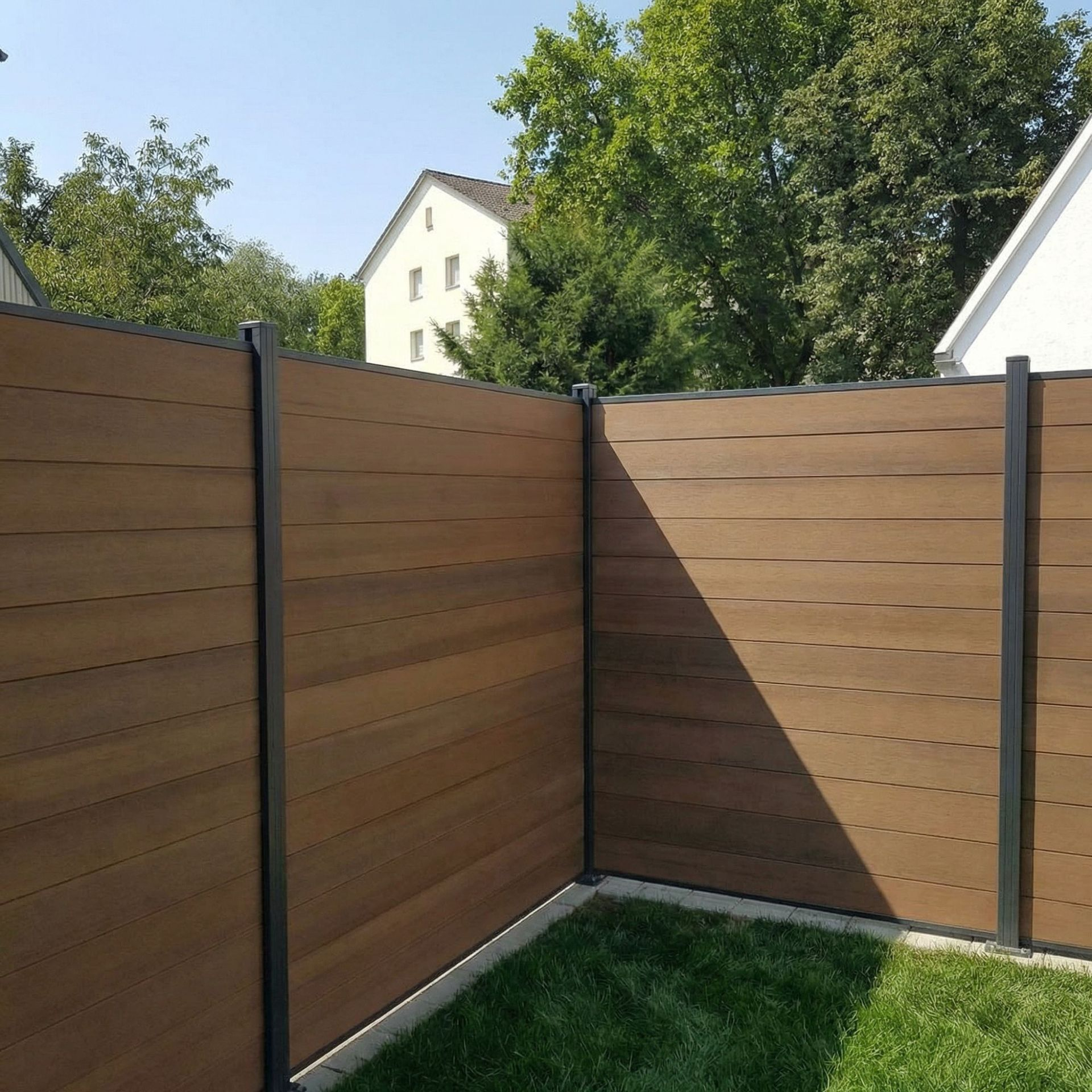
Horizontal slat composite fencing creates a trendy industrial modern exterior style. However, horizontal layouts bring unique structural challenges that vertical fences do not have.
Horizontal boards bear lateral spanning weight, leading to higher sagging risks between fence posts, especially for wide fence layouts. In addition, thermal expansion runs along the full board length. Exposed screws will lock the material and restrict natural expansion and contraction, causing internal stress, surface warping in summer, and obvious gaps in winter.
Hidden Fastener System for Stable Long-Term Performance
Professional hidden fastener systems completely solve horizontal fence sagging and thermal deformation problems. Groove-type and clamp-type hidden fixtures fix slats from the back or side edges, creating a clean screw-free surface.
This hidden structure works like a sliding track, allowing each 12-foot board to expand or contract freely by up to 0.5 inches. It evenly disperses thermal stress and avoids deformation and cracking caused by fixed fasteners.
Adopting corrosion-resistant stainless steel and polymer accessories prevents surface staining and rust degradation. Compared with traditional exposed screw installation, hidden fastener technology reduces long-term maintenance costs by 25% to 30% and effectively extends the service life of horizontal composite fencing.
Frequently Asked Questions
What are the benefits of vertical slatted composite fencing?
Vertical slatted composite fencing offers modern minimalist aesthetics, stable UV-resistant color performance, excellent moisture resistance, and warp-free durability with almost no daily maintenance.
What makes board-on-board composite fencing different?
Its overlapping slat design delivers full-angle privacy while reducing wind load by up to 40%. Optimized thermal expansion gaps ensure stable performance in changing seasons.
Why choose lattice-top composite fencing?
Lattice-top designs meet municipal non-solid fence zoning rules, avoiding high permits and variance fees while balancing privacy, daylight, and community aesthetic requirements.
How to prevent horizontal composite fencing from sagging and warping?
Professional hidden fastener systems adapt to thermal movement, release structural stress, eliminate sagging issues, and maintain long-term flatness and neat appearance.