 EN

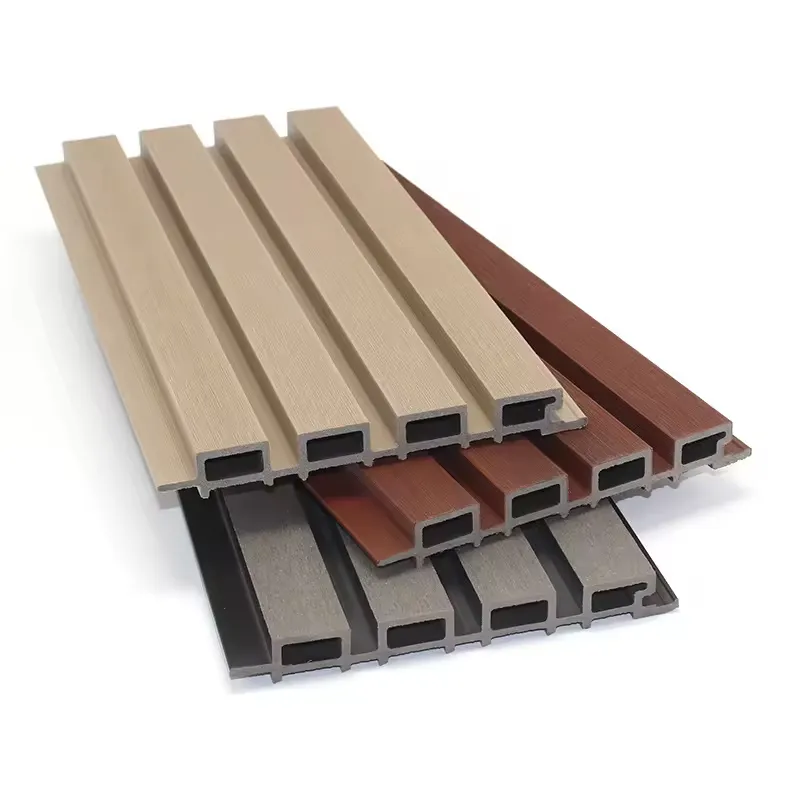
WPC wall panels have become a practical choice for bathrooms, kitchens, and basements because they stay stable where traditional wood fiberboard fails. The reason is that natural wood fiber is sealed inside a polymer matrix before the panel meets humidity. This mechanism helps specifiers choose the right product for wet rooms and avoid costly callbacks.
How WPC Wall Panels Block Water at the Source
Polymer Encapsulation of Wood Fiber
The defining step is polymer encapsulation. Natural wood fiber is mixed with food-grade PP, PE, or HDPE polymer and extruded at 160–180°C, so each cellulose strand is coated by molten plastic. This wood plastic composite structure leaves almost no exposed fiber for water to soak into. Because the polymer matrix fully surrounds the fiber, capillary action that normally pulls moisture into wood has no path. WPC wall panels built this way resist swelling even when humidity stays high. The encapsulation is not a coating that scratches off; it runs through the cross-section.
Drying Wood Fiber to 8–10% Moisture Content
Before mixing, the wood fiber is dried to a strict 8–10% moisture content. Raw timber often carries far more internal water, and that trapped moisture later drives warping and mold. By removing most of it up front, the wood plastic composite starts dry and stays balanced inside the panel. A lower moisture content also means fewer voids where condensation forms. This drying step, done under controlled factory conditions, is why finished panels keep their shape in steamy bathrooms. Specifiers should ask suppliers for the drying standard, since inconsistent moisture content causes field failure.
Why the Material Stays Waterproof and Corrosion-Free
Co-Extrusion and the Protective Cap Layer
Modern lines use co-extrusion to add a dense cap layer over the core. The cap is a tougher polymer skin that shields the wood fiber beneath from direct contact with water and cleaning chemicals. A well-formed cap layer prevents surface absorption and resists scratches that would expose the core. During constant-pressure extrusion, the core and cap bond as one piece, so the protection is structural. This built-in dimensional stability, referenced in EN 317–319 for board swelling under moisture, is why these profiles hold size in a wet area. For wet-area use, choose WPC wall panels where the cap covers edges and grooves, the points where liquid first enters a wall system.
Anti-Corrosion and UV Stabilizer Additives
The polymer itself does not rust, but biological and chemical corrosion still threaten wall surfaces. Manufacturers blend anti-corrosion additive packages and UV stabilizer compounds into the mix so the panel fights fungus, mildew, and sun-driven breakdown. A UV stabilizer slows color fade on south-facing walls, while the anti-corrosion additive inhibits the microbes that eat cellulose. These additives are distributed through the whole section, not just sprayed on top. In poolside changing rooms, WPC wall panels keep their surface intact year after year without painted sealers.
A Real Basement Renovation Scenario
When MDF Panels Failed by the Poolside
A riverside hotel needed wall finishes for a semi-open poolside lounge where splashes and humidity stayed constant. The original specification used MDF decorative panels, a material that absorbs water readily. Within one season the MDF swelled, edges lifted, and black mold appeared along the lower joints. The maintenance team repainted twice, but moisture kept returning through the substrate because the core had absorbed water. The lesson is clear: in a wet area, WPC wall panels succeed where MDF failed because the fiber is sealed, not bare.
How the Team Solved the Problem
For the renovation, the team selected capped WPC profiles with a full cap layer on all four edges. Installation followed standard batten framing, with a small ventilated gap behind the panels to let stray humidity escape. Because the wood fiber was already dried to 8–10% moisture content and encapsulated in polymer, the new wall showed no swelling after eighteen months of poolside service. The effect was a stable, mold-free surface that needed only occasional wiping. For specifiers, WPC wall panels proved that the right material choice, not more paint, was the real fix for a wet area.
Procurement and Maintenance Advice for Wet Areas
What to Inspect Before Buying
Buyers should verify the cap layer coverage, the drying standard, and third-party test reports. Ask for documents referencing ASTM D7031 for composite performance and ISO 4892 for UV exposure resistance, since bathrooms and kitchens face water and sunlight. Check that edges are capped, not bare, and confirm the wood fiber source is consistent. WPC panels from a controlled line should list E0 formaldehyde class and REACH compliance. A quick on-site test is to place a drop of water on the cut edge; a sealed panel shows no darkening after several minutes.
Daily Care and Long-Term Maintenance
Maintenance is simple because the polymer surface repels grime. Wipe walls with a damp cloth and a mild cleaner; avoid abrasive pads that could thin the cap layer. In a wet area, keep a small ventilation gap and fix leaks promptly so the substrate stays dry. Inspect joints each season for new staining, and re-seal perimeter trims if needed. Because the wood fiber is encapsulated, minor surface scuffs do not invite rot. With steady care, these panels stay serviceable across many humid seasons without replacement.
The evidence is consistent: waterproofing and anti-corrosion in WPC come from structure, not surface paint. Wood fiber dried to 8–10% moisture content, sealed by polymer encapsulation, and protected by a co-extruded cap layer with anti-corrosion additive and UV stabilizer, gives reliable performance in bathrooms, kitchens, and basements. WPC wall panels earn trust in wet areas because the fiber is locked away from water at every stage. Specifiers who verify cap coverage, drying standards, and test reports avoid the callbacks that doomed the poolside MDF. Choose the material by its mechanism, and the wall stays sound.
Frequently Asked Questions
Question
What makes WPC wall panels different from MDF in wet rooms?
Answer: The difference is structural. MDF exposes bare cellulose that soaks up water and swells within a season. The composite here seals wood fiber inside a polymer matrix and adds a cap layer, so liquid cannot reach the core. That sealed structure is why these panels hold shape near pools and showers while fiberboard fails. Specifiers see fewer callbacks.
Question
Why does drying wood fiber to 8–10% moisture content matter?
Answer: Trapped water inside fiber is what later drives warping, mold, and joint gaps. By drying to a strict 8–10% moisture content before mixing, the material starts balanced and stays that way inside the polymer. Less internal water means fewer voids where condensation forms. This controlled step, done on the factory line, is a main reason finished boards keep their size in steamy bathrooms and basement laundry rooms.
Question
How is the cap layer applied during production?
Answer: Modern lines use co-extrusion, pushing a denser polymer skin over the core in a single pass at 160–180°C. Constant-pressure extrusion bonds cap and core as one structural piece, so the protection is not a film that peels. A quality cap covers faces, edges, and grooves, blocking water at the points where a wall system first meets liquid. Requesting full-edge capping raises service life in wet rooms.
Question
Can these panels be used in a basement or bathroom?
Answer: Yes. Rooms with steady humidity and splashes are exactly where a sealed composite performs well. The wood fiber stays locked in polymer, so swelling and mold stay low even through seasonal changes. For basements, keep a ventilated gap and fix leaks fast so the substrate stays dry. With capped edges and routine wiping, the material serves bathrooms, kitchens, and basement laundry areas without failures seen in bare fiberboard.
Question
Which standard helps verify composite durability?
Answer: ASTM D7031 covers performance of wood-plastic composites and is a solid reference for specifiers. For sunlight exposure, ISO 4892 guides UV testing, while EN 317–319 addresses board swelling under moisture. Requesting these reports from the supplier gives objective proof of how a product behaves in wet areas. Pair the documents with an on-site water-drop check on a cut edge to confirm the cap and encapsulation are real, not just claimed.