EN
EN

The Advantages of WPC Wall Panels Compared to Traditional Wall Panels
Time : 2026-04-07
In the dynamically transforming architecture and interior design landscape, wall cladding solutions continuously evolve to meet increasingly rigorous demands for durability, sustainability, and cost-efficiency. Wood-Plastic Composite (WPC) wall panels have swiftly emerged as a revolutionary alternative to traditional materials, effectively overcoming the persistent limitations inherent in conventional options like solid wood, ceramic tiles, and plasterboard.
1. Superior Moisture & Water Resistance
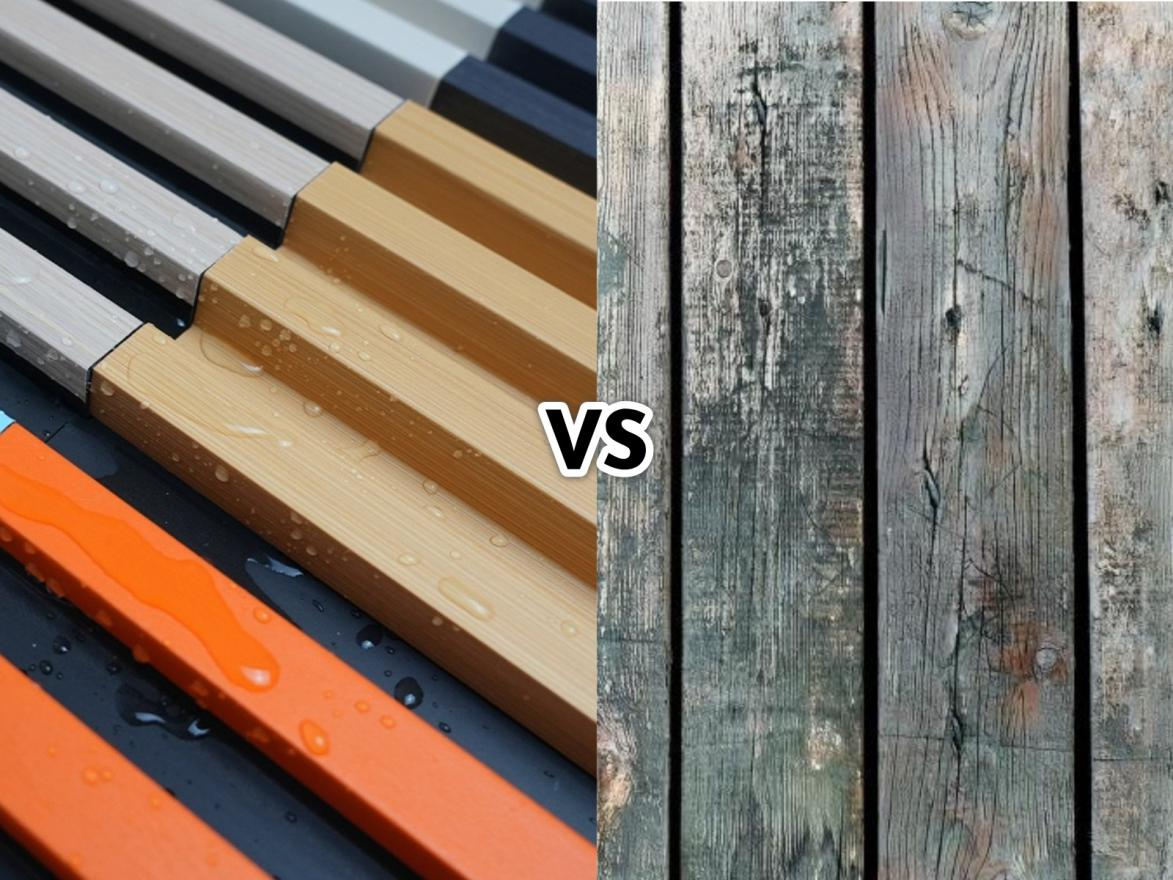
The most critical and impactful advantage of WPC panels stands out in their exceptional moisture resistance. Traditional wall materials, particularly solid wood and plywood, are highly hydrophilic and prone to a cascade of issues—including warping, swelling, microbial growth, and rot—in humid environments like bathrooms, kitchens, and basements.
WPC wall panels are highly effective at preventing the occurrence of these issues.WPC panels are crafted from a precise blend of 50-70% recycled wood fibers and 30-50% thermoplastics, fortified with water-proofing additives and compressed under intense heat. This advanced composite structure yields an extremely low water absorption rate of less than 0.1%, a figure staggering lower than solid wood's typical 10-15%. This fundamental difference ensures WPC panels remain structurally sound, dimensionally stable, and entirely free from mold infestation, even under prolonged exposure to moisture. By eliminating the core failure point of traditional materials, WPC panels dramatically reduce costly maintenance and premature replacements.
2. Enhanced Durability & Longevity
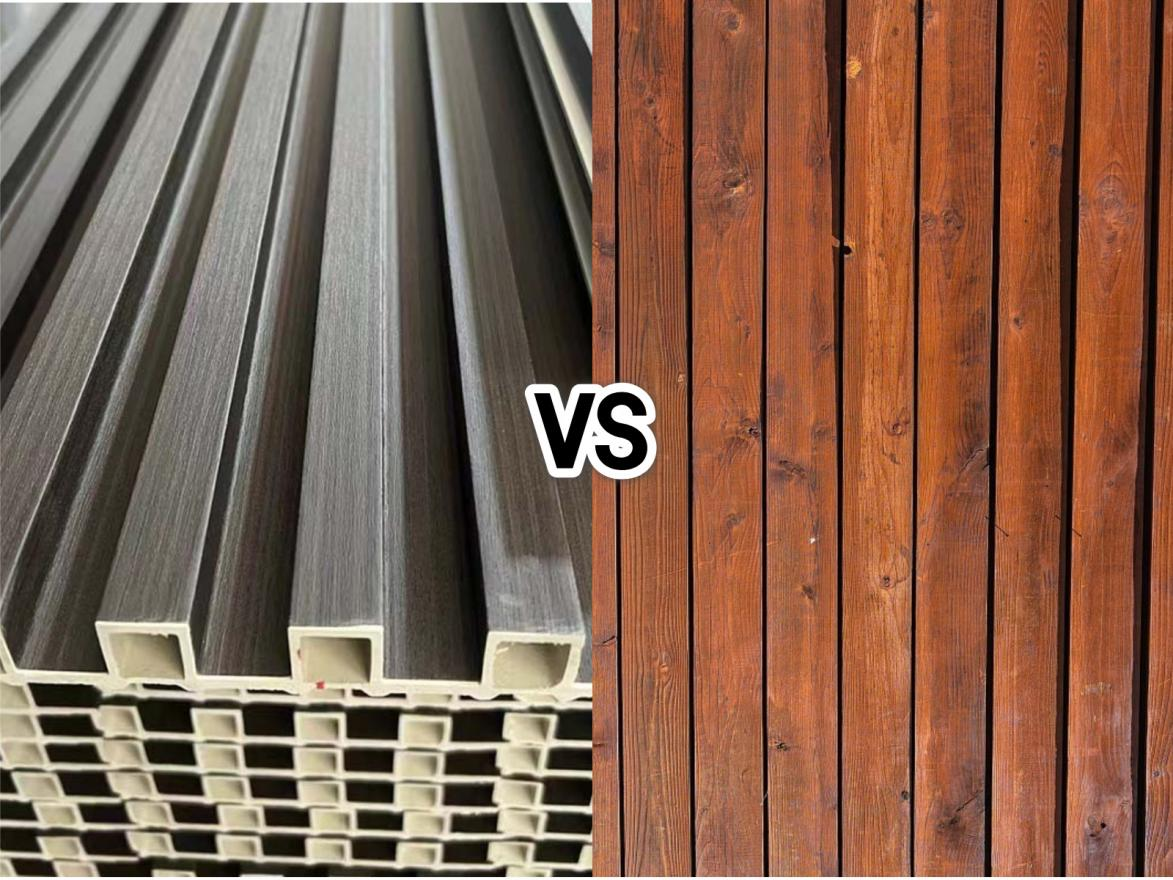
WPC wall panels significantly outperform traditional wall materials in structural integrity and longevity. Conventional options prove highly vulnerable to wear, scratches, impact damage, and relentless UV degradation. When exposed to intense sunlight, solid wood boards will inevitably fade and crack; tiles remain brittle and prone to chipping; plasterboard is easily dented and compromised.
Compared to traditional wall panels, WPC wall panels boast an exceptionally robust composite construction, delivering superior resistance to scratches, impacts, and UV rays. Rigorously tested during manufacturing, their thermal expansion coefficient is meticulously controlled to remain well below stringent industry standards. This guarantees minimal deformation even under extreme temperature fluctuations. With proper installation, WPC panels offer a projected service life of 15 to 20 years—dramatically exceeding the typical 5 to 10-year lifespan of most traditional wall panels.
3. Eco-Friendly & Sustainable Composition
The environmental requirements for modern architecture are becoming increasingly stringent, and WPC panels are a leading sustainable solution. Traditional solid wood panels rely on large quantities of timber, resulting in a waste of tree resources, while plywood and particleboard rely on formaldehyde-laden adhesives that release harmful volatile organic compounds (VOCs), compromising indoor air quality.
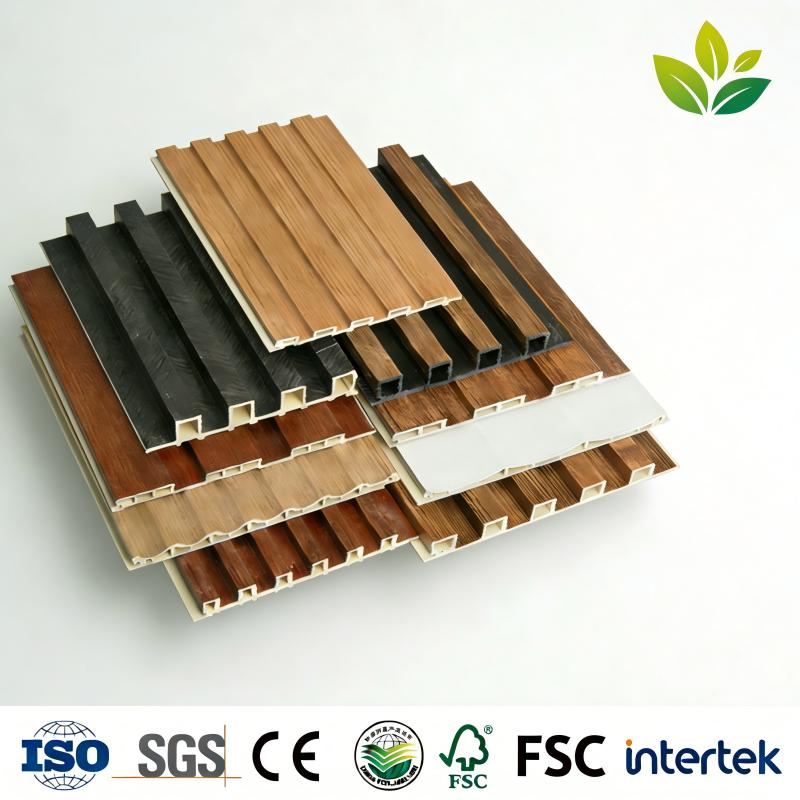
WPC wall panels, by contrast, are manufactured primarily from recycled wood fibers and post-consumer plastic waste, diverting tons of material from landfills. They are completely formaldehyde-free and heavy metal-free, complying with stringent global environmental standards such as GB/T17657-2013. This green composition not only reduces the carbon footprint of a project—reducing emissions by 3.2 tons per 100 square meters compared to PVC panels—but also ensures a safe, non-toxic indoor environment that can be occupied immediately after installation.
4. Efficient Installation & Cost-Effectiveness
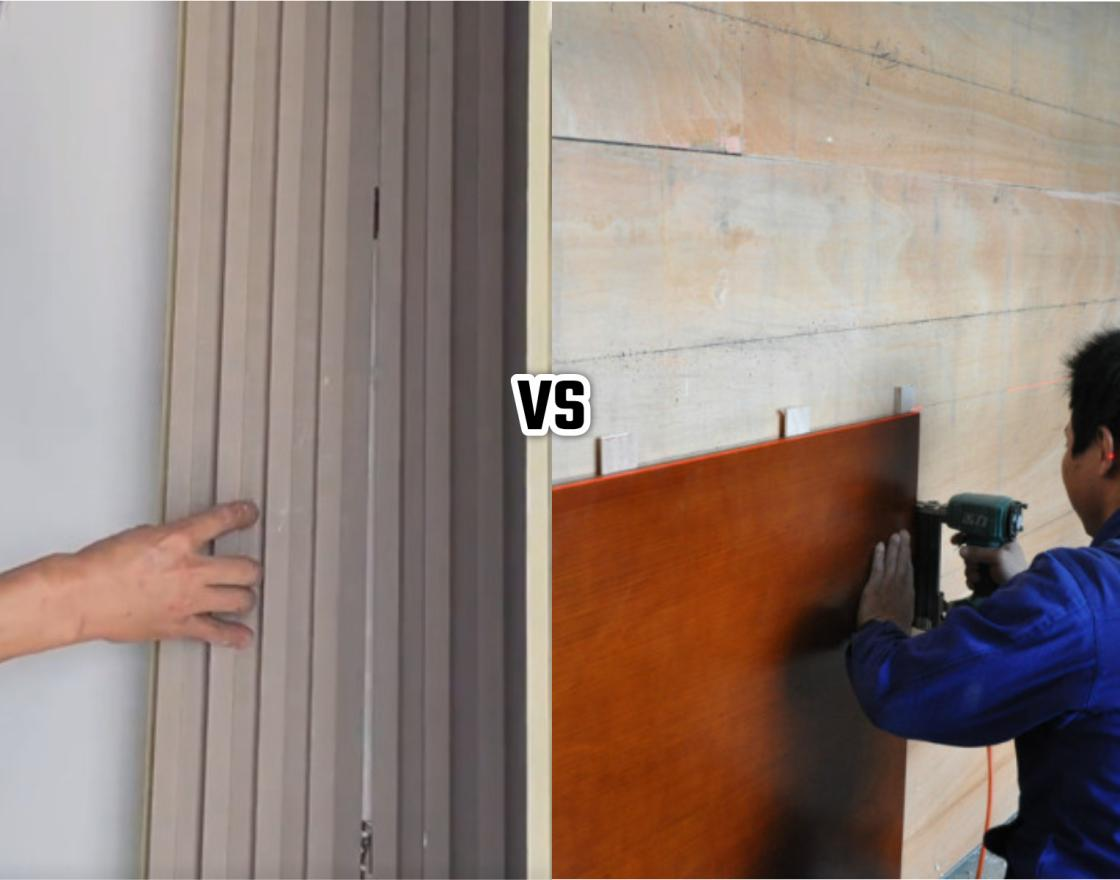
Traditional wall systems are labor-intensive and time-consuming: solid wood necessitates pre-treatment (painting or sealing); tiles demand meticulous professional fitting with grout and mortar; plasterboard involves multiple layers of finishing and sanding. These intricate steps significantly inflate labor costs and prolong project timelines.
WPC wall panels, in contrast, are engineered for maximum efficiency. Their lightweight nature and innovative interlocking or tongue-and-groove system enable remarkably rapid, hassle-free installation—up to three times faster than tiling. Minimal surface preparation is required, often permitting direct installation over existing walls. Economically, labor costs for WPC panel installation range from a mere $3 to $8 per square foot, dramatically lower than the $7 to $10 per square foot typical for solid wood paneling. This positions WPC as a financially prudent choice, offering compelling value both for immediate project budgets and long-term investment.
5. Minimal Maintenance Requirements
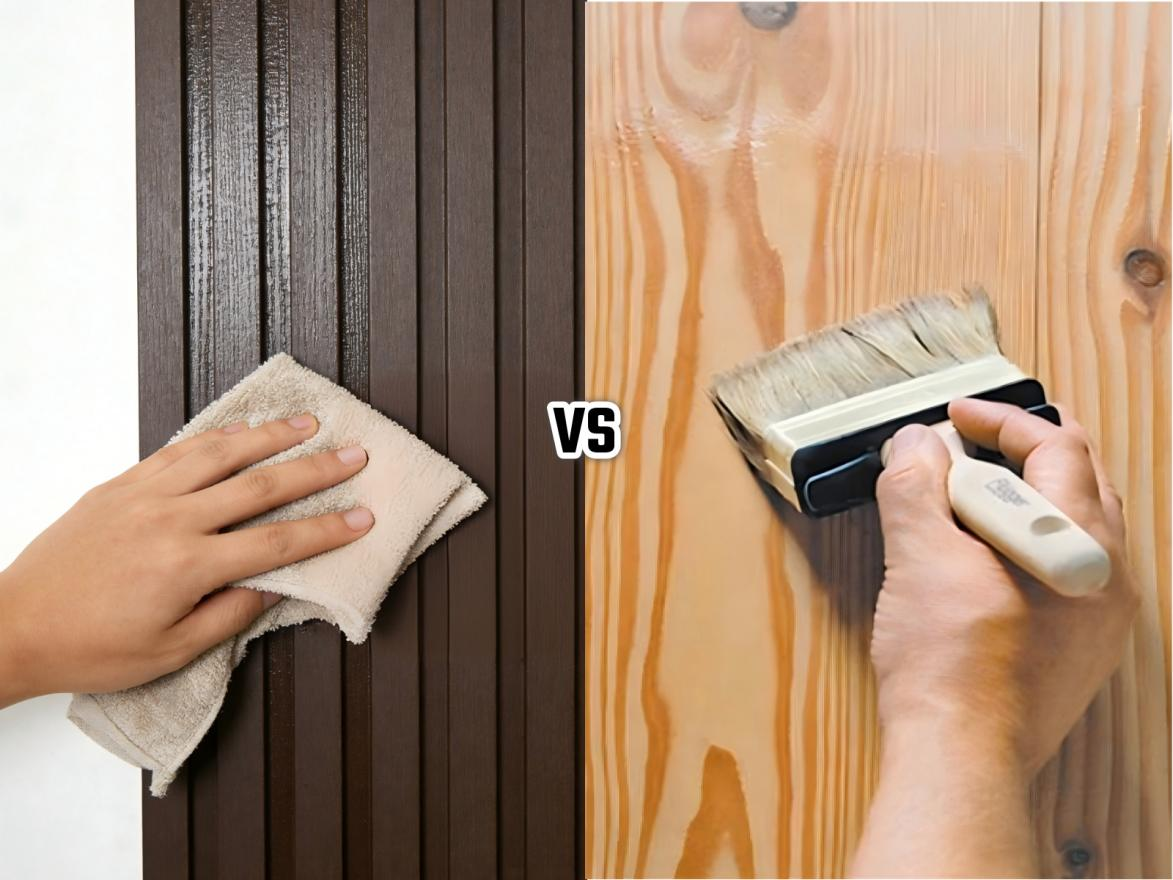
Maintaining traditional wall panels is a constant battle. Solid wood demands periodic repainting and sealing to fend off decay; tiles require frequent grout cleaning to combat mold; plasterboard stains readily and needs patching.
WPC wall panels offer a new, low-maintenance solution. Their flawlessly smooth, non-porous surface boasts an impressive stain resistance rating of ≥4. Cleaning becomes effortless, needing only a damp cloth and mild detergent. Crucially, no periodic treatments like sealing or repainting are necessary, slashing ongoing maintenance costs—up to 70% lower than traditional wood panels. This makes WPC wall panels the ideal choice for busy homeowners and high-traffic commercial spaces where upkeep time is precious.
6. Unmatched Design Versatility
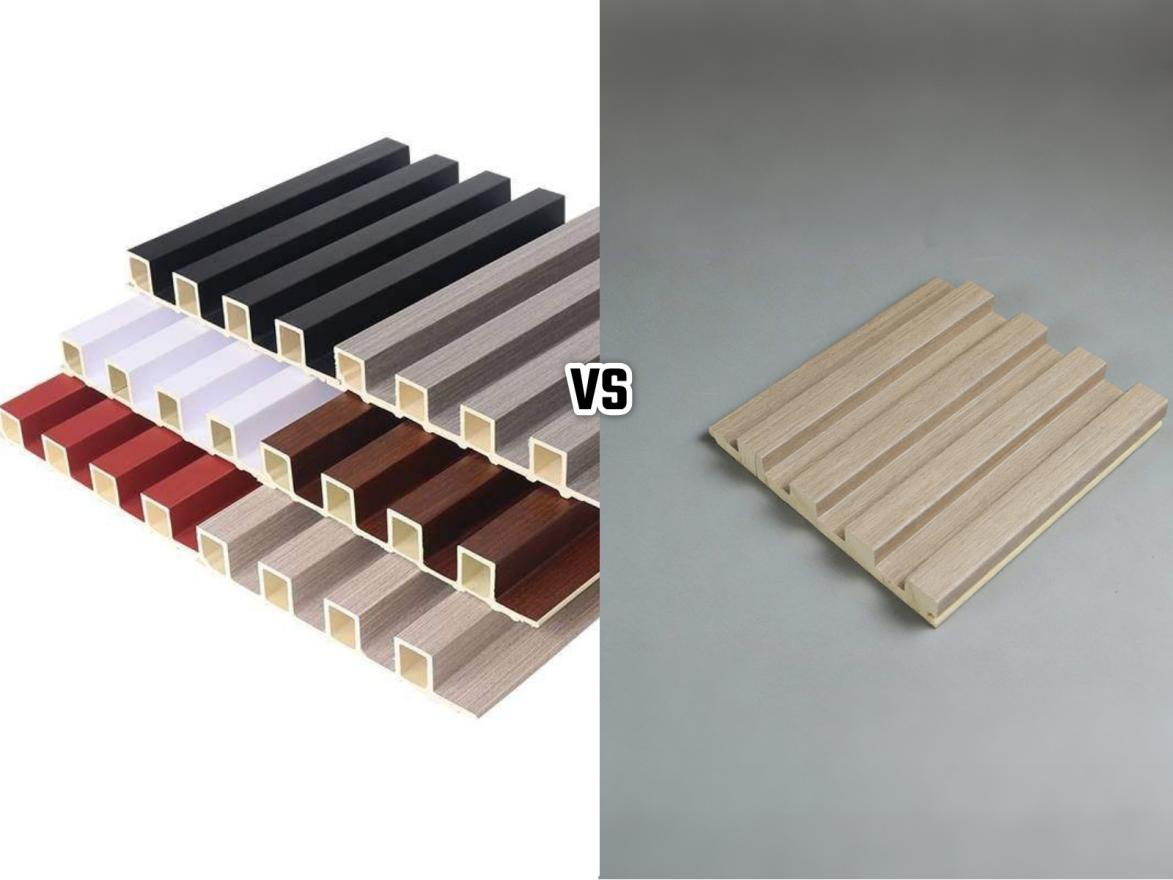
WPC wall panels deliver design flexibility unmatched by traditional materials. They capture the authentic essence of wood, stone, or concrete, available in a dazzling array of colors, textures, and patterns to seamlessly complement any design vision, from sleek modern minimalism to timeless rustic charm.
Solid wood offers a fixed grain; tiles present limited color choices; plasterboard remains intrinsically plain until treated. WPC wall panels excel in both interior and exterior settings, perfect for living rooms, bathrooms, bedrooms, offices, hotels, and shopping malls, Providing designers with a rich toolkit of creative tools to help them turn their visions into reality.
Conclusion
WPC wall panels surpass traditional wall decoration materials across six core dimensions: superior moisture resistance, durability, environmental sustainability, rapid installation, low maintenance costs, and design flexibility. As the global construction industry transitions toward greener, more efficient, and more cost-effective solutions, WPC wall panels have firmly established themselves as the industry benchmark. Whether for homeowners seeking a durable, hassle-free living space, or for contractors aiming to optimize project delivery and enhance profitability, WPC wall panels offer practical, customized solutions that redefine the trajectory of modern wall decoration materials.