 EN
EN

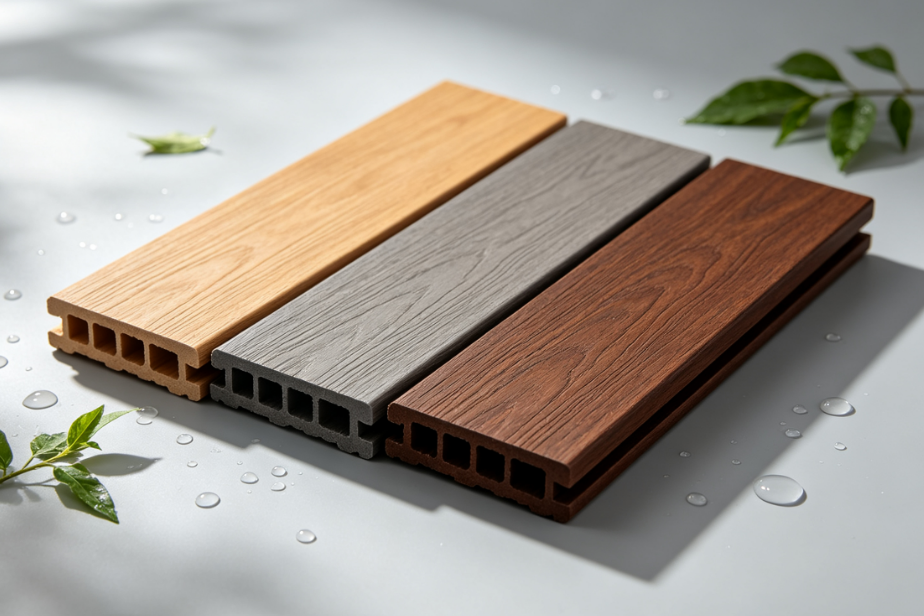
Choosing the right wall panel material can be overwhelming, especially when faced with four distinct options. Each material serves different needs, budgets, and environments—and picking the wrong one can lead to costly mistakes. This guide breaks down WPC, PVC, MDF, and natural wood across seven key factors to help you make an informed decision for your next project.
1. Material Composition: What Are They Made Of?
Understanding what's inside each panel explains how they perform over time.
WPC (Wood-Plastic Composite): A hybrid material combining wood fibers (typically 60–70%) with thermoplastic resins like HDPE or PVC. This blend gives WPC the natural look of wood with the resilience of plastic.
PVC (Polyvinyl Chloride): A 100% synthetic plastic polymer. It contains no wood fibers, making it consistent and uniform throughout.
MDF (Medium-Density Fiberboard): Engineered wood made from compressed wood fibers and resin. It's essentially sawdust bonded with glue under heat and pressure.
Natural Wood: Solid timber sourced from trees like oak, pine, cedar, or walnut. It's the only truly organic option with authentic grain patterns.
2. Moisture Resistance: Which Can Handle Water?
This is where the four materials diverge dramatically.
WPC: Highly moisture-resistant. The plastic content prevents water absorption, making it suitable for bathrooms, kitchens, and even outdoor applications.
PVC: 100% waterproof. PVC is non-porous and does not absorb water at all, ideal for high-moisture environments like bathrooms and basements.
MDF: Poor moisture resistance. MDF swells, warps, and can disintegrate when exposed to water. Never use MDF in humid areas—it can fail within 6–12 months.
Natural Wood: Moderate to poor depending on the species and treatment. Untreated wood absorbs moisture, leading to rot, mold, and warping.
3. Durability and Lifespan: How Long Will It Last?
Longevity varies significantly across the four materials.
|
Material |
Typical Lifespan |
Key Durability Notes |
|
WPC |
15–25 years |
Resists rot, termites, and decay. Holds screws well. Stable structure-2-9-1 |
|
PVC |
10–20 years |
Resists chemical corrosion. Can become brittle in extreme cold or yellow in direct sun-1-9-6 |
|
MDF |
5–10 years |
Low durability. Prone to swelling, scratching, and edge damage-4-7 |
|
Natural Wood |
20–50 years |
Extremely durable with proper care. Ages beautifully. Can warp without maintenance |
4. Maintenance Requirements
WPC: Low maintenance. Occasional cleaning with soap and water. No painting or sealing required.
PVC: Minimal maintenance. Easy to wipe clean with a damp cloth. No polishing needed.
MDF: Medium maintenance. Requires painting or sealing. Needs careful handling to avoid moisture damage.
Natural Wood: High maintenance. Requires regular polishing, sealing, or varnishing. Yearly care is typical.
5. Aesthetic Appeal
WPC: Natural wood-like appearance with authentic grain textures. Warm feel underfoot. Available in limited designs compared to PVC.
PVC: Smooth, glossy, or printed finishes. Wide design variety (wood grain, marble, metallic). Can look "plastic-like" to some.
MDF: Smooth surface ideal for painting. Can be shaped into decorative patterns. No natural grain.
Natural Wood: Unmatched authentic beauty. Timeless, luxurious appearance. Unique grain patterns in every piece.
6. Cost Comparison
Prices vary significantly across materials and regions.
Typical Price Range (per m²):
|
Material |
Price per m² |
Best For |
|
PVC |
$5–$20 |
Budget projects, rentals, utility spaces-1-9 |
|
MDF |
$15–$40 |
Cost-conscious interiors, painted walls-1-4 |
|
WPC |
$20–$60 |
Premium interiors, eco-friendly projects, outdoors-1-9 |
|
Natural Wood |
$30–$150+ |
Luxury projects, high-end residential, resorts |
Key Insight: While WPC has a higher upfront cost than PVC, it often proves more economical long-term due to lower maintenance and extended lifespan. A $18/sqft WPC panel lasting 20 years costs roughly the same per year as a $9/sqft MDF panel lasting 12 years.
7. Best Applications: Where to Use Each Material
|
Space/Application |
Best Material |
Why |
|
Bathrooms & Kitchens |
PVC or WPC |
Water resistance is critical-1-7 |
|
Outdoor Walls & Decking |
WPC (or treated wood) |
Weather-resistant, UV-stable-1-5 |
|
Living Rooms & Bedrooms |
WPC or Natural Wood |
Aesthetics and warmth matter most-6-8 |
|
Basements & Garages |
PVC or WPC |
Moisture resistance needed; avoid MDF-1-7 |
|
High-Traffic Commercial |
WPC |
Superior strength and impact resistance-6 |
|
Temporary/Rental Projects |
PVC |
Low cost, easy removal-6-7 |
|
Luxury Accent Walls |
Natural Wood or Premium WPC |
Premium aesthetics define the space-4-7 |
|
Painted Decorative Walls |
MDF |
Smooth surface takes paint well |
Quick Reference: Material Comparison Summary
|
Factor |
WPC |
PVC |
MDF |
Natural Wood |
|
Cost |
Medium-High |
Low-Medium |
Low-Medium |
High |
|
Lifespan |
15–25 years |
10–20 years |
5–10 years |
20–50+ years |
|
Moisture Resistance |
Good-Excellent |
Excellent |
Poor |
Poor-Good |
|
Maintenance |
Low |
Minimal |
Medium |
High |
|
Aesthetics |
Wood-like |
Synthetic/Printed |
Smooth/Paintable |
Authentic |
|
Eco-Friendliness |
Good (recycled) |
Fair (recyclable) |
Fair |
Variable |
Which One Should You Choose?
Choose PVC if:
- You're on a tight budget
- The space is moisture-prone (bathrooms, kitchens)
- You want easy installation and minimal maintenance
- The project is temporary or rental-focused
Choose WPC if:
- You want the look of wood with plastic durability
- The area sees high traffic or moderate moisture
- You're planning a long-term investment
- The project is outdoor or eco-conscious
Choose MDF if:
- You need an affordable painted finish
- The space is always dry
- You want smooth, customizable surfaces
- The project isn't permanent
Choose Natural Wood if:
- Authentic beauty matters most
- You're willing to invest in maintenance
- The space is dry (living rooms, bedrooms)
- You want long-term value and aging character
Final Recommendation for Commercial Buyers
For most commercial projects, WPC offers the best balance of durability, aesthetics, and long-term value. It outperforms PVC in strength and appearance, avoids the moisture pitfalls of MDF, and requires far less maintenance than natural wood—all while supporting eco-friendly building practices through its recycled content.
"WPC adds visual warmth and structural reliability where design impact matters."
About Naturewing: As a manufacturer with over 10 years of experience in WPC and PVC panel production, Naturewing offers full in-house manufacturing, CE/SGS/ISO 9001 certifications, 15-25 day lead times, and complete test reports with batch traceability documentation. For more product information or sample requests, please contact us.