 EN
EN

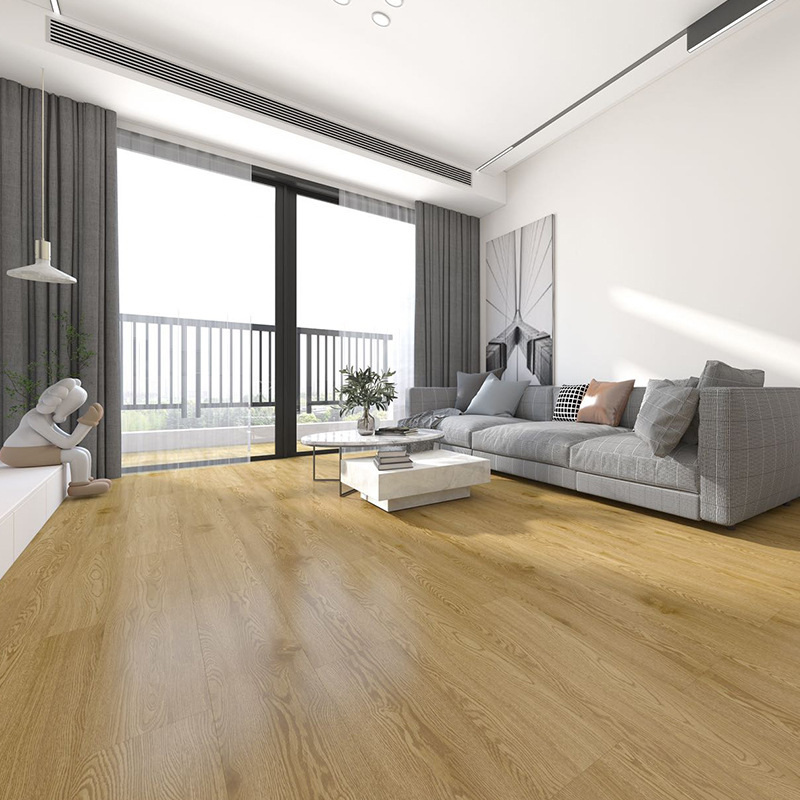
Beyond the Hype: The Engineering That Makes SPC Flooring Truly Rigid and Waterproof
For architects, contractors, and homeowners, the term “rigid core” has become a buzzword in the flooring industry. However, not all rigid core products are created equal. Stone-Plastic Composite flooring, commonly known as SPC, has distinguished itself through a unique combination of material science and mechanical engineering. When a floor is marketed as waterproof and dimensionally stable, it is easy to dismiss the claims as simple marketing hype. Yet, for SPC flooring, these characteristics are not just promotional slogans; they are validated by the physical properties of the core layer and the precision of the locking system. Understanding what makes SPC genuinely rigid requires a close look at its composition, its behavior under stress, and the mechanisms that keep water from penetrating the floor assembly.
The Material Science Behind the Rigid Core
The defining feature of SPC flooring is its core layer, which is a dense, engineered composite. This core is manufactured by blending finely ground limestone powder with polyvinyl chloride resin and thermal stabilizers. The limestone content is typically significant, making up the majority of the formulation. This high mineral loading is the secret to the floor's structural rigidity. Unlike traditional vinyl flooring, which uses a foamed or flexible backing, the limestone-PVC composite is fused under intense heat and pressure. The result is a completely homogeneous, non-porous slab that is exceptionally hard and heavy. Because it contains no wood fibers or trapped air pockets, it does not absorb moisture, and it resists the expansion and contraction that plagues organic materials. When you walk across an SPC plank, you feel the solid, stable foundation beneath your feet.
Testing the Claims of Structural Rigidity
The claims of rigidity are not just theoretical; they are measurable through standardized engineering tests. When a point load is applied to a floor plank, the amount of flex it exhibits is a direct indicator of its structural quality. SPC planks are subjected to rigorous deflection testing, and the results consistently demonstrate their superiority over flexible alternatives. In practical terms, this means that an SPC floor will maintain its flat, level surface even when heavy furniture is placed on top of it. This stiffness also protects the locking mechanism. If a floor plank bends excessively under weight, the strain is transferred to the edges, which can cause the locking joints to separate and form unsightly gaps. The dimensional stability of SPC prevents this, ensuring that the floor remains tightly locked together for years.
The Dual Mechanism of Waterproof Performance
The waterproof capability of SPC flooring is based on a dual defense system. The first line of defense is the core itself. Because the core is heavily filled with stone powder and fused with PVC, it is completely non-porous. Liquid cannot penetrate the surface of the plank. The second, and equally important, line of defense is the seam. The planks are manufactured with precision-milled click-lock profiles. These profiles are machined to extremely tight tolerances, allowing each plank to interlock with its neighbor with near-zero gap. When the planks are snapped together correctly, the friction and the mechanical geometry of the lock create a tight seal. This prevents water from seeping down through the joints and reaching the subfloor. When these two systems work together, the floor acts as a unified, continuous waterproof membrane.
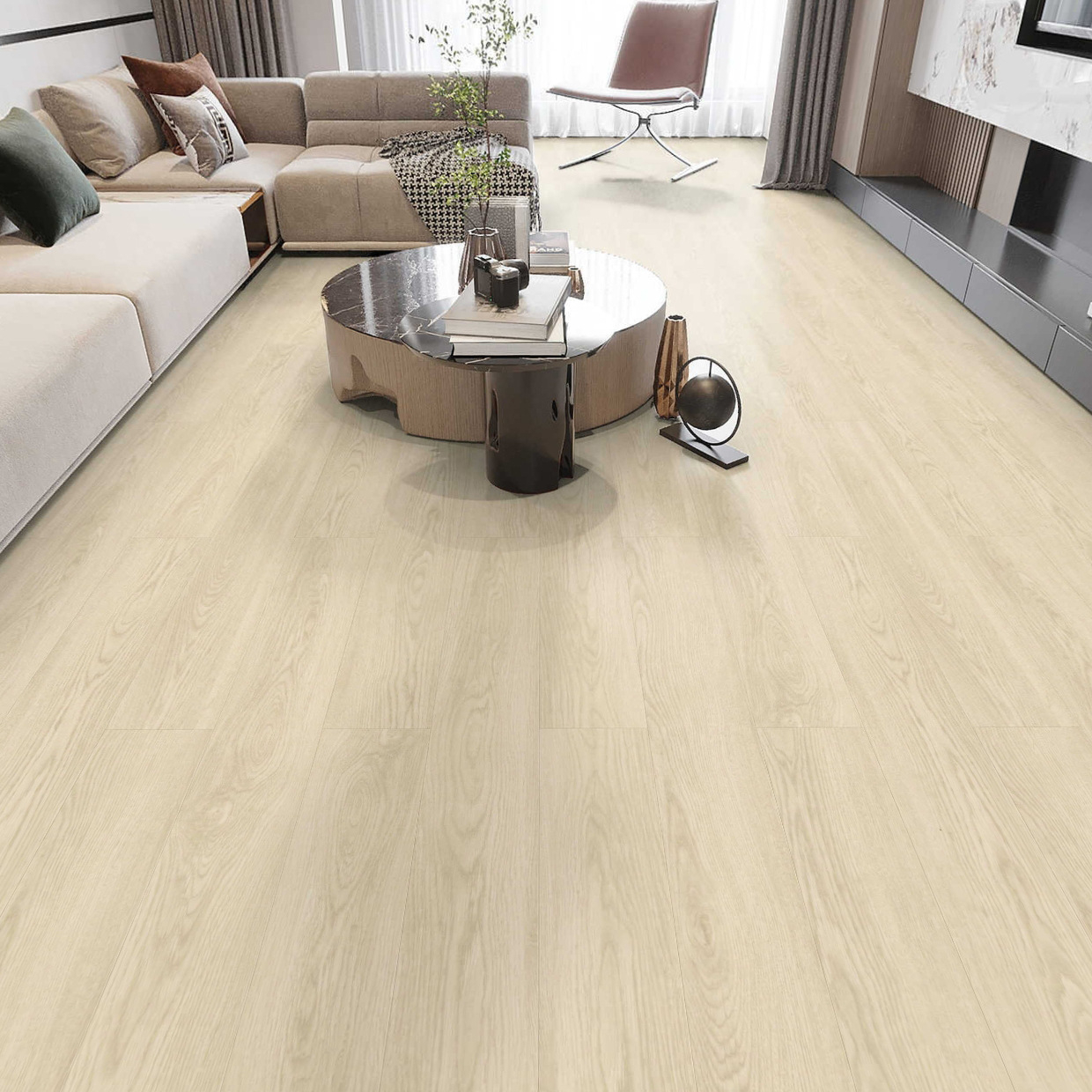
Understanding the Limits of Waterproof Claims
While SPC flooring is remarkably waterproof, it is important for installers to understand the practical limits of this capability. The waterproof performance is highly dependent on the quality of the installation. If the subfloor is not perfectly level, or if dust and debris are trapped in the locking joints, the planks may not engage fully. This leaves a microscopic gap that can become a pathway for water. Over time, water seeping through these poorly locked joints can reach the subfloor. Therefore, the surface must be impeccably clean and the planks must be fully seated during installation. Also, while the core is impervious to water, the floor is not a substitute for a proper vapor barrier. If the concrete slab beneath the floor is actively releasing moisture, that vapor can still become trapped beneath the flooring. In new construction or over damp concrete, a dedicated vapor barrier is still a mandatory requirement to protect the structural integrity of the building.
How Rigidity Protects the Floor Over Time
The rigid core does more than just support weight; it actively preserves the waterproof seal over the lifespan of the floor. Over time, temperature changes cause materials to expand and contract. In a floor that flexes easily, this movement can cause the locking joints to flex, which opens micro-gaps that invite water intrusion. Because the SPC core is so stiff, it effectively resists the thermal movement. The planks remain locked in their original position, and the seams stay tightly sealed. This stability ensures that the waterproof performance does not degrade after a few heating and cooling seasons. For a homeowner who installs SPC in a basement or kitchen, this long-term stability is the true value proposition. It provides peace of mind that the floor will continue to protect the subfloor year after year.
Comparing SPC to Traditional Laminate and Vinyl
The difference between SPC and other flooring types becomes most apparent when they are exposed to moisture. Laminate flooring is constructed from compressed wood fibers. When water penetrates the surface, the wood fibers swell, and the plank can delaminate, ruining the structural integrity of the floor. This damage is often irreversible. Traditional flexible vinyl flooring is more water-resistant, but its soft backing provides less support, and gaps can form at the seams if the floor flexes under heavy loads. SPC combines the best attributes of both. It offers the water resistance of vinyl, but with the rigid, load-bearing stability of a solid composite. This makes it uniquely suitable for high-traffic areas that are also exposed to regular moisture, such as commercial kitchens, utility rooms, and bathrooms.
The Importance of Installation Quality for Long-Term Performance
Ultimately, the long-term performance of an SPC floor is determined by the quality of the installation. The click-lock system is a precision mechanism. The installer must use a tapping block to ensure each joint is fully seated. Inspecting the subfloor for flatness and moisture levels before installation is absolutely critical. If the subfloor has high spots or low valleys, the rigid planks will not sit flat, which can cause stress on the locking joints over time. Successful installers know that preparing the subfloor is often more important than the flooring material itself. A clean, flat, and dry subfloor is the foundation upon which the rigid core can perform its intended function.
How Manufacturing Quality Guarantees Flooring Consistency
The consistent quality of SPC flooring is a direct reflection of the manufacturing discipline. The purity of the raw materials, the precision of the extrusion die, and the quality control of the milling process all determine how well the planks will click together. Manufacturers who adhere to recognized quality management standards, such as ISO 9001, inspect every batch of material and monitor the production line in real time to maintain tight dimensional tolerances. This discipline ensures that every plank fits perfectly with its neighbor, creating a floor that is both beautiful and durable. For a contractor or homeowner who relies on their floor to withstand years of heavy foot traffic and occasional spills, choosing a product from a disciplined manufacturer provides the ultimate confidence in the investment.