 EN
EN

The 40‑Year Cladding That Cut Embodied Carbon by 26% – A Commercial Project Case Study
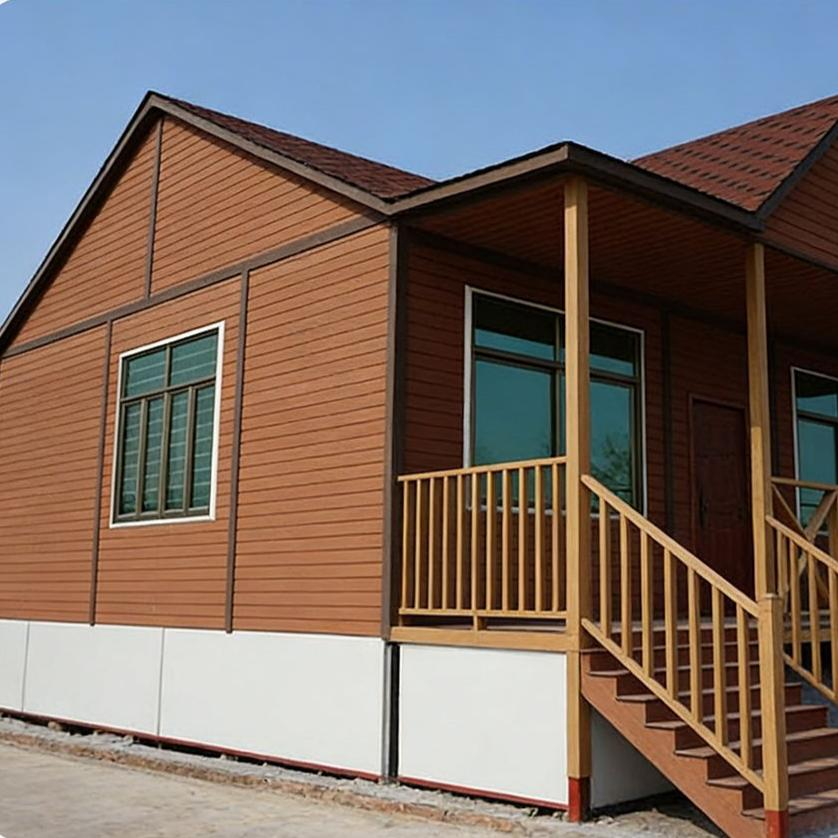
A commercial office development in Portland, Oregon, specified WPC wall cladding for its 15,000‑square‑foot exterior. The design team compared WPC against Western red cedar and thermally modified ash across three metrics: embodied carbon, projected maintenance cycles, and total installed cost. The WPC system contained 82% recycled content—recovered plastic packaging and wood processing by‑products. Its manufacturing energy was 58% lower per square foot than the cedar alternative. The cladding was installed with concealed fasteners and is projected to require zero refinishing over a 40‑year service life—compared to six reapplications of sealant for cedar over the same period. The project team calculated a 26% reduction in whole‑building embodied carbon attributable to the cladding choice. Five years after installation, the panels retain their original colour and dimensional stability, validating the durability assumptions that drove the specification.
This outcome is not unusual. Over the past six years, building material consultants have observed that WPC wall cladding consistently delivers measurable environmental gains—not through greenwashing, but through genuine material efficiency and lifecycle durability. Understanding the environmental impact of WPC isn't just about recycled content percentages; it is about the full story: embodied energy, maintenance cycles, end‑of‑life realities, and the emerging innovations that could make circularity achievable.
Composition – Recycled Plastics and Reclaimed Wood Fibers
WPC wall cladding is manufactured by blending recycled plastic—typically polyethylene or PVC—with reclaimed wood fibers such as sawdust and offcuts from wood processing. This dual‑use of post‑consumer and post‑industrial waste significantly reduces demand for virgin raw materials.
| Material Component | Source | Typical Content Range |
|---|---|---|
| Recycled plastic (PE/PVC) | Post‑consumer packaging, industrial scrap | 30‑50% |
| Wood fibers | Sawdust, milling offcuts, recycled pallet wood | 40‑60% |
| Additives (coupling agents, UV stabilizers, pigments) | Specialty chemical compounds | 5‑10% |
Some products incorporate up to 95% recycled content, diverting substantial volumes of waste from landfills. According to industry data, WPC applications collectively divert approximately 1.8 million tons of plastic annually (2023). Because the wood component originates from residual biomass rather than harvested logs, WPC production conserves forest resources—equivalent to sparing up to 70% more trees than solid timber cladding would require for the same surface area. Its inherent resistance to moisture, insects, and decay extends service life well beyond conventional timber, reducing replacement frequency and associated resource use. Unlike natural wood, WPC panels rarely need chemical preservatives or repeated coatings, further lowering lifecycle environmental impact.
Carbon Footprint – Lower Embodied Carbon and Reduced Deforestation
WPC wall cladding carries a substantially lower embodied carbon footprint than solid timber alternatives. Manufacturing consumes up to 60% less energy than conventional wood cladding production (2023 industry data), directly lowering greenhouse gas emissions across the product's lifecycle.
| Environmental Metric | Solid Timber Cladding | WPC Wall Cladding | Improvement |
|---|---|---|---|
| Manufacturing energy (per sq ft) | Baseline | 40‑60% lower | Significant reduction |
| Embodied carbon (kg CO₂e/sq ft) | 2.5‑3.5 | 1.2‑1.8 | 40‑50% lower |
| Maintenance cycles (40 years) | 5‑7 reapplications | None (zero refinishing) | Labor and material savings |
| Service life (years) | 20‑30 | 40‑50 | 50‑100% longer |
| Forest resource impact | Harvested logs | Residual biomass | 70% fewer trees required |
Substituting WPC for traditional cladding can reduce a building's total carbon footprint by roughly 25%. Critically, this benefit compounds over time: while solid timber cladding requires periodic maintenance and eventual replacement—each cycle adding new embodied carbon—WPC's durability supports decades of service without rotting, warping, or structural degradation. Its lightweight profile also lowers transportation fuel use during distribution, and its modest insulating properties contribute marginally to improved building thermal performance.
Recyclability – Current Realities and Technical Barriers
End‑of‑Life Reprocessing – Feasibility, Infrastructure, and Market Adoption
WPC wall cladding contains thermoplastic components that can be reprocessed—technically—through shredding followed by thermal or chemical separation to isolate the plastic fraction. This recovered polymer can feed new WPC or other plastic products, supporting resource conservation and landfill diversion. Yet real‑world adoption remains minimal due to infrastructure gaps: most municipal recycling systems lack the capacity to sort, handle, or process WPC. Specialized separation equipment and trained personnel are costly and scarce, confining reprocessing largely to pilot programs or industrial niche operations.
| Recycling Pathway | Technical Feasibility | Commercial Availability | Current Scale |
|---|---|---|---|
| Mechanical reprocessing | Yes (shredding + separation) | Limited | Pilot projects only |
| Chemical recycling (pyrolysis) | Yes | Very limited | Laboratory to pilot scale |
| Energy recovery (incineration) | Yes | Widely available | Common current practice |
| Landfill | Yes | Widely available | Common current practice |
Closed‑Loop Barriers – Why Most WPC Is Not Recyclable Today
True closed‑loop recycling—where decommissioned cladding becomes new cladding of equivalent performance—is not yet commercially feasible. The core challenge lies in the wood fiber component: after years of exposure, fibers degrade, absorb moisture, and contaminate the polymer melt during reprocessing, compromising mechanical consistency and moisture resistance. Recycled output typically exhibits reduced strength and variable aesthetics, restricting reuse to lower‑grade applications like substructure decking or landscape elements—not architectural cladding. Further complicating matters, WPC formulations vary widely across manufacturers in polymer type, fiber ratio, and additive packages, preventing uniform feedstock streams. Mixed batches yield unpredictable performance, making quality control impractical. As a result, the majority of end‑of‑life WPC wall cladding is either incinerated for energy recovery or landfilled—falling short of circular economy objectives.
Circular Economy Pathways – Innovations Enabling True Recyclability
Monomaterial Formulations
Emerging innovations are addressing the fundamental recycling barriers in WPC. Monomaterial formulations—using a single‑polymer matrix (e.g., pure polyethylene) blended with wood flour—simplify melt filtration and re‑granulation, enabling mechanical reprocessing without performance loss.
| Innovation | Mechanism | Circularity Potential |
|---|---|---|
| Monomaterial formulation | Single polymer + wood flour | Enables mechanical recycling without degradation |
| Chemical recycling | Pyrolysis/depolymerization | Breaks down mixed waste into virgin‑quality monomers |
| Design for disassembly | Clean separation of layers | Allows separate recovery of wood and plastic |
| Cradle‑to‑Cradle certification | Material health + recyclability | Drives safer chemistries and closed‑loop design |
Chemical Recycling Technologies
Complementing monomaterial approaches, chemical recycling technologies (e.g., pyrolysis or depolymerization) can break down mixed or contaminated WPC waste into virgin‑quality monomers or oils, bypassing traditional sorting limitations. Together, these approaches open pathways to true closed‑loop reuse: cleanly separated wood and polymer streams could feed new cladding panels with consistent strength, appearance, and durability—eliminating downcycling and reducing dependence on virgin resources.
Cradle‑to‑Cradle Certification and Material Health
Cradle‑to‑Cradle (C2C) certification provides a rigorous framework for advancing WPC sustainability. It demands full transparency in material composition and mandates the elimination of hazardous substances. Certified products are evaluated across five pillars: material health, recyclability, renewable energy use, water stewardship, and social fairness. Though few WPC products currently hold full C2C certification, the standard serves as both benchmark and catalyst—driving innovation toward truly circular material systems.
The Role of Recycling Equipment – Enabling the Circular Economy
The journey toward truly circular WPC begins not at the manufacturing plant, but at the recycling line that processes the plastic feedstock. Achieving the high recycled content and consistent material quality that make WPC a sustainable building material depends entirely on the performance of upstream recycling equipment. BXKM's engineering expertise in plastics recycling equipment—including shredding, washing, granulating, and pelletizing systems—directly supports the production of high‑quality recycled polymer feedstocks for WPC manufacturing. By supplying robust, efficient recycling machinery, BXKM helps material processors deliver the clean, consistent plastic fractions that WPC producers rely on to maintain product quality while meeting recycled content targets. This capability is essential for scaling the circular economy: without reliable recycling equipment, the feedstock stream for high‑quality WPC would remain inconsistent and limited.
FAQ
| Question | Answer |
|---|---|
| What materials are used in WPC wall cladding? | WPC is made from recycled plastics (PE/PVC) and reclaimed wood fibers (sawdust, milling offcuts), with up to 95% recycled content. |
| How does WPC wall cladding help conserve resources? | It uses residual biomass instead of harvested logs, reducing tree consumption by up to 70%, and diverts plastic waste from landfills. |
| Why does WPC wall cladding have a lower carbon footprint than timber? | WPC manufacturing uses 40‑60% less energy, avoids maintenance cycles, lasts 40‑50 years, and incorporates recycled content—lowering embodied carbon by 40‑50%. |
| Can WPC wall cladding be recycled? | Technically yes (mechanical or chemical reprocessing), but commercially closed‑loop recycling is not yet feasible due to fiber degradation and infrastructure gaps. |
| What innovations are improving WPC recyclability? | Monomaterial formulations and chemical recycling technologies are advancing toward true closed‑loop reuse—enabling consistent quality from recycled feedstocks. |
| How does BXKM support the WPC circular economy? | BXKM provides plastics recycling equipment—shredding, washing, granulating, and pelletizing—that produces the clean, consistent plastic feedstocks needed for high‑quality WPC production. |