 EN

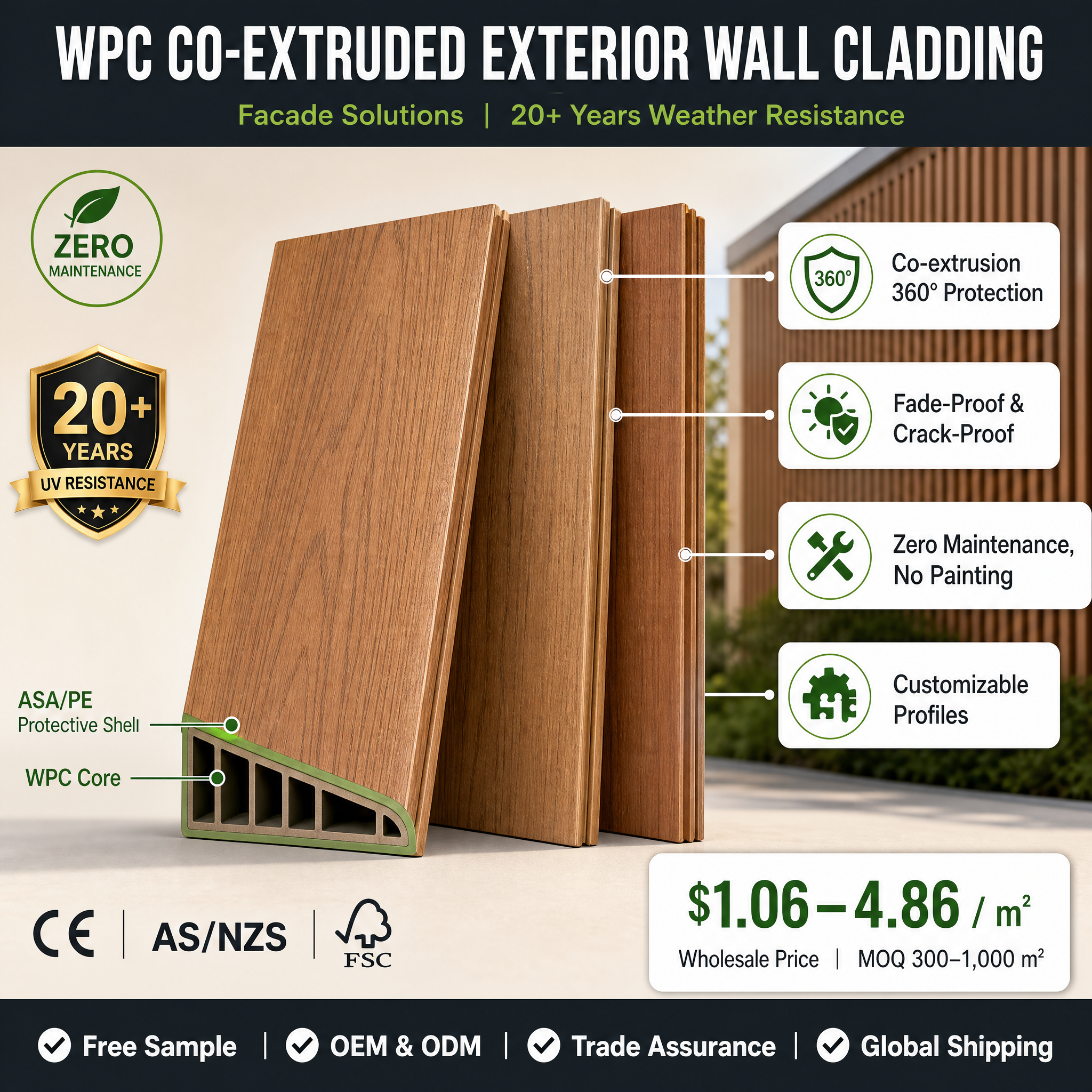
How Exterior Wall Cladding Lowers Long-Term Maintenance Costs
Durability-driven deferral of façade repairs and replacements
Exterior wall cladding extends maintenance intervals by decoupling the weather-resistant surface from the structural wall and using materials engineered to withstand ultraviolet exposure, thermal cycling, moisture, and impact. While traditional painted stucco typically requires recoating every 5–7 years and masonry repointing every 15–20 years, high-performance fiber cement, aluminum, and terracotta systems often remain serviceable for 25–30 years before major intervention. This durability doesn’t eliminate maintenance—sealant joints, flashings, and drainage paths still require scheduled inspection—but it defers the largest repair and replacement line items. Building envelope cost analyses show durable cladding reduces routine façade maintenance costs by 20%–30% compared with conventional siding and exterior finishes. The result is a lower annual reserve requirement and fewer disruptive repair cycles for occupied buildings—particularly valuable for mid-rise and high-rise structures, where scaffolding and access costs magnify the expense of repeated façade work. Facility managers can redirect capital toward mechanical, electrical, or interior upgrades instead of recurring scaffold drops and surface restoration.
Lifecycle cost comparison: High-performance cladding vs. traditional stucco and masonry over 25 years
A 25-year lifecycle view reshapes the value equation. Stucco and masonry often appear less expensive at installation, but their maintenance schedules include repainting, caulking, crack repair, and occasional moisture remediation. High-performance cladding carries higher upfront material and installation costs, yet its longer service life and reduced repair frequency lower cumulative outlay. The table below compares representative 25-year ownership costs per square foot for mid-rise commercial walls, based on 2023 façade maintenance databases.
| System | Initial cost | 25-year maintenance | Total cost |
|---|---|---|---|
| Traditional stucco | $8–$12 | $18–$28 | $26–$40 |
| Masonry | $22–$35 | $14–$22 | $36–$57 |
| High-performance cladding | $16–$24 | $6–$10 | $22–$34 |
The total cost range for high-performance cladding is often lower than masonry and comparable to—or lower than—stucco when repainting, sealing, and moisture repair are factored in. Fewer tenant disruptions, reduced scaffolding needs, and minimized building downtime deliver additional operational savings not captured in direct cost totals.
Moisture Management: Preventing Hidden Damage and Costly Remediation
Rainscreen principles and integrated drainage planes reduce moisture-related maintenance by up to 60%
Water trapped behind façade surfaces often remains hidden until structural decay, mold growth, or coating failure becomes visible. Exterior wall cladding systems mitigate this risk through rainscreen design: a ventilated air cavity separates the outer rain screen from the structural wall, equalizing pressure and enabling incidental water to drain downward. Integrated drainage planes channel moisture to weep openings—preventing saturation of insulation, sheathing, or framing. This deflection-and-drying sequence avoids prolonged wetting, the primary driver of rot, corrosion, and microbial growth. Poor moisture control contributes to roughly 70% of building defect claims in U.S. construction, and severe water damage restoration can exceed $20,000 per incident. Rainscreen cladding with continuous drainage can reduce moisture-related maintenance by up to 60% by keeping vulnerable layers dry. In contrast, by the time visible staining appears on a face-sealed wall, hidden corrosion may already be active behind the surface. A drained, back-ventilated design prevents that condition—resulting in fewer emergency repairs, extended coating life, and lower long-term ownership cost.
Climate Resilience and Material Performance of Exterior Wall Cladding
UV resistance, thermal cycling stability, and impact performance across aluminum, fiber cement, and terracotta systems
Exterior wall cladding weather resilience varies significantly by material—and climate-specific specification directly influences long-term repair frequency and total façade ownership cost. In accelerated UV testing, high-performance coated aluminum retains over 80% of its initial gloss after 3,000 hours, while uncoated fiber cement can fade by more than 10 Delta E units. Thermal cycling stability also differs: aluminum panels tolerate 150°F daily temperature swings without cracking; fiber cement requires movement joints every 20–30 feet to avoid stress fractures. For impact resistance, terracotta baguette systems typically achieve only 2–4 ft-lb before chipping, compared with 50+ ft-lb for 4 mm aluminum composite panels. On high-UV or coastal sites, factory-applied fluoropolymer finishes can extend repainting intervals from ~8 years to 20+ years. Material thickness, finish chemistry, and substrate preparation further influence performance—making project-specific testing essential.
Installation Quality and Inspection Protocols: Avoiding Cost Multipliers
Fastening errors and cut-edge corrosion — causes of 22% of post-warranty cladding remediation claims
Fastening errors and cut-edge corrosion are among the most common preventable drivers of long-term façade failure—and account for 22% of post-warranty cladding remediation claims, according to industry warranty-claims reviews. Overdriven screws crack panels; underdriven fasteners allow wind-induced movement and joint stress. Unsealed cut edges expose fiber cement substrates and metal cores to moisture, triggering edge rust, delamination, and progressive panel failure.
Rigorous inspection protocols reduce this risk: verifying fastener depth, spacing, and pull-out resistance before panel closure; confirming that every factory or field cut receives an approved edge coating; and auditing sealant continuity at transitions. Early correction costs a fraction of later structural repair. Without this oversight, building owners pay twice—first for original installation, then again for hidden rework that compromises durability, moisture management, and long-term value.
FAQ Section
What is exterior wall cladding?
Exterior wall cladding refers to the application of an outer layer of material to protect and enhance building walls. It improves durability, insulation, and aesthetic appeal while reducing long-term maintenance costs.
How does wall cladding reduce long-term costs?
Wall cladding systems, especially high-performance types, feature durability and materials engineered to withstand harsh weather. They defer repairs and replacements, leading to reduced maintenance costs over time.
What is the advantage of rainscreen cladding?
Rainscreen cladding prevents moisture from penetrating and damaging structural layers by utilizing an integrated drainage system. It reduces risks associated with rot, corrosion, and microbial growth.
Why is material choice critical for exterior cladding?
Material choice impacts weather resistance, UV stability, thermal cycling tolerance, and impact durability. Selecting suitable materials based on climate-specific conditions enhances performance and minimizes repair needs.
What common errors occur during cladding installation?
Fastening errors, improper sealing of cut edges, and inadequate inspection protocols are common mistakes that lead to long-term damage and increased maintenance costs.