 EN
EN

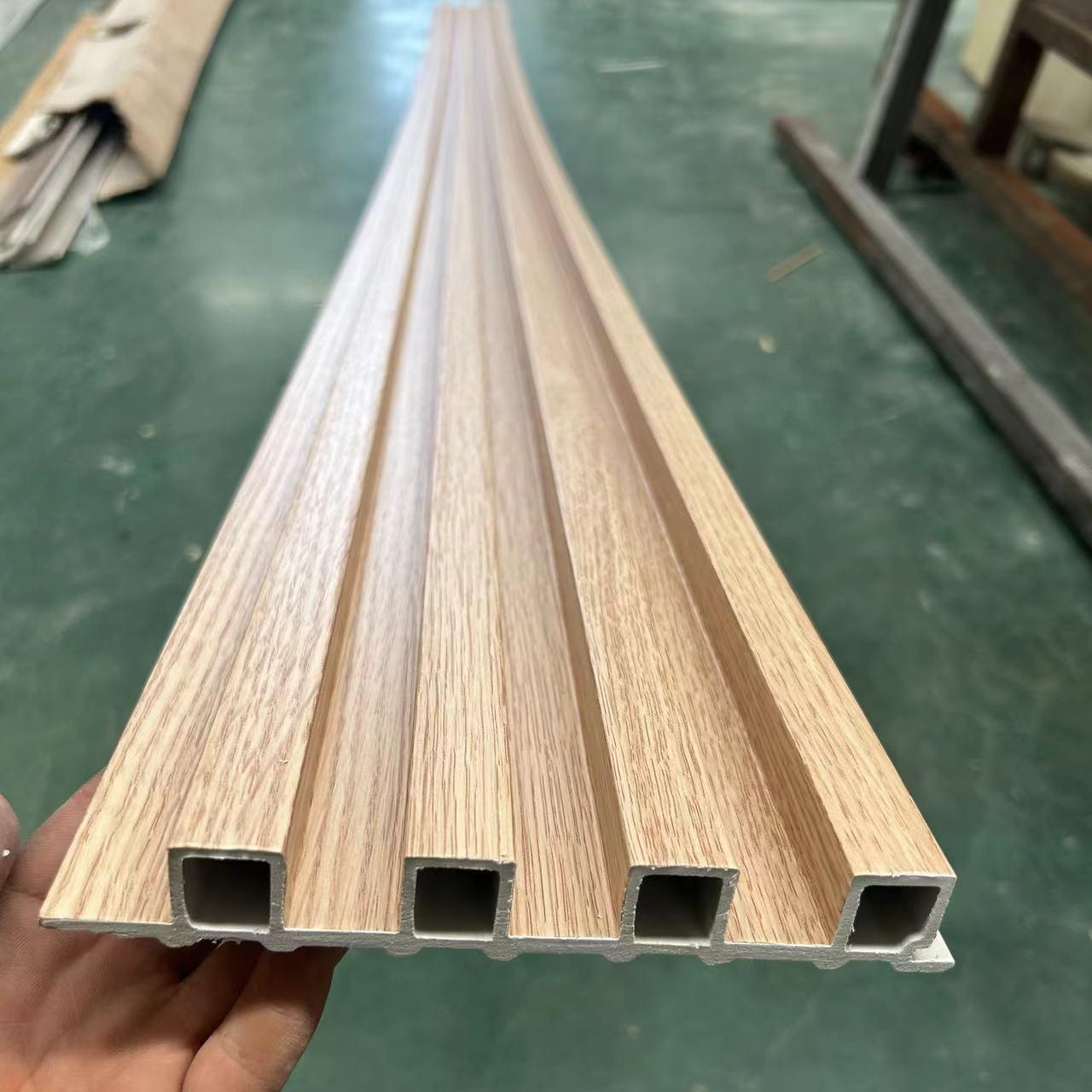
WPC Composition: The Foundation of 20-Year Durability in Wall Panels
Wood Fibers + Polymer Matrix: How Structural Synergy Prevents Degradation
The extraordinary lifespan of WPC wall panels begins at the molecular level, where wood fibers and a polymer matrix form a synergistic composite that resists degradation far better than either material alone. Recycled wood flour or bamboo powder provides stiffness and a natural aesthetic, while the polymer matrix—typically polyethylene, polypropylene, or PVC—encapsulates each fiber to create a continuous moisture barrier. This encapsulation prevents water from reaching the wood core, eliminating the primary cause of rot, swelling, and fungal decay. Unlike solid wood, which expands and contracts with humidity, the polymer stabilizes the fibers, keeping moisture absorption below 0.5% in premium formulations. The plastic component also absorbs impact energy—rated at 20 kJ/m²—without cracking, while the wood maintains dimensional rigidity. Over 20–30 years, this balance prevents delamination, splintering, or warping, ensuring consistent performance indoors and out.
Critical Additives: UV Stabilizers, Biocides, and Coupling Agents for Long-Term Integrity
No raw composite achieves two decades of reliability without engineered additives. Hindered amine light stabilizers (HALS) and titanium dioxide (TiO₂) absorb or reflect UV radiation, preventing polymer chain scission that leads to embrittlement and fading; high-quality panels retain original color for 15–25 years under direct sun exposure. Biocides—such as zinc borate or organic fungicides—are dispersed throughout the matrix to suppress mold, mildew, and termite activity. Since the polymer shell already denies nutrition to pests, these additives serve as a redundant safeguard. Coupling agents like maleic anhydride-grafted polypropylene chemically bond hydrophilic wood fibers to the hydrophobic polymer, eliminating weak interfaces where micro-cracks could initiate. Together, they raise heat deflection temperature, reduce thermal expansion, and preserve impact strength over time. The table below summarizes how each additive class counteracts a specific degradation pathway.
| Additive Type | Function | Longevity Impact |
|---|---|---|
| UV stabilizers (HALS, TiO₂) | Block UV rays | Prevents fading and surface cracking for 15–25 years |
| Biocides | Inhibit microbial growth | Eliminates rot and termite risk permanently |
| Coupling agents | Bond wood to polymer | Prevents delamination and micro-crack formation |
Environmental Resistance: Why WPC Wall Panels Withstand Moisture, UV, and Temperature Extremes
Near-Zero Water Absorption (<1.5%) and Rot Prevention in High-Humidity Installations
WPC wall panels are engineered with a dense polymer matrix that limits water absorption to less than 1.5% by weight—effectively preventing the swelling, warping, and rot that compromise natural wood in humid spaces like bathrooms, kitchens, and basements. The plastic phase blocks capillary action, stopping moisture from migrating through the panel structure. Field data from coastal and tropical installations show no measurable fungal growth or dimensional change after 10 years of exposure. Because the composite contains no free cellulose accessible to microorganisms, the risk of mold or mildew remains negligible over its full service life.
UV Stability Over Decades: HALS, TiO₂, and Fade Resistance in Real-World Exposure
HALS and TiO₂ work in tandem to ensure long-term UV resistance: HALS neutralize free radicals generated by sunlight, while TiO₂ reflects and scatters UV rays before they penetrate the polymer. Accelerated weathering tests simulating 20 years of outdoor exposure confirm that UV-stabilized WPC panels retain over 90% of their original color and exhibit only minor gloss reduction. Real-world deployments in desert and high-altitude regions validate this performance—panels resist chalking, cracking, and noticeable fading, preserving both visual appeal and structural integrity across extreme solar conditions.
Biological & Physical Resilience: Termite Resistance, Crack Suppression, and Dimensional Stability
Non-Nutritive Polymer Matrix Eliminates Termite and Fungal Attack Risk
The polymer matrix in WPC wall panels offers no nutritional value to termites or wood-decay fungi. Its tightly bound blend of thermoplastic and wood fibers denies insects the cellulose they require, while integrated biocides provide an additional layer of protection against microbial colonization. As a result, installations in moist or subtropical climates remain free from biological degradation for decades—without chemical treatments or routine inspections—maintaining structural integrity and appearance where natural wood would rapidly deteriorate.
Low Thermal Expansion and Minimal Warping: Ensuring Seamless Appearance for 20+ Years
WPC panels feature a coefficient of thermal expansion significantly lower than pure plastics and closely aligned with timber—minimizing buckling or cupping across temperature swings from freezing winters to scorching summers. Uniform melt-flow during extrusion ensures even stress distribution, eliminating localized warping. Over 20+ years of service, panels retain flatness and tight joint alignment, delivering the clean, seamless aesthetic expected by architects and property owners.
FAQ
What are WPC wall panels made of?
WPC wall panels consist of a blend of wood fibers or bamboo powder and a polymer matrix, typically polyethylene, polypropylene, or PVC.
How do WPC panels resist moisture?
WPC panels have a high-density polymer matrix that prevents water absorption below 1.5%, blocking capillary action and eliminating rot risks even in humid areas.
Do WPC panels require chemical treatments for termites?
No, the polymer matrix denies termites cellulose nutrition, and integrated biocides add an extra layer of protection without requiring routine chemical treatments.
Can WPC panels retain color in outdoor installations?
Yes, with UV stabilizers like HALS and TiO₂, WPC panels retain over 90% of their original color for decades under direct sunlight.
How long do WPC panels typically last?
Premium formulations can maintain structural and aesthetic integrity for 20–30 years, even under extreme environmental conditions.