 EN

Unmatched Durability and Moisture Resistance for High-Demand Spaces
How PVC wall panels resist moisture, mold, scratches, and impact in bathrooms, kitchens, and commercial settings
PVC wall panels feature a dense, non-porous surface with a closed-cell structure that blocks water absorption and inhibits mold growth—no organic substrate means no food source for spores. Independent testing per ASTM D570 confirms water absorption of less than 0.5% by mass (2023), preventing warping, swelling, or delamination even under repeated steam exposure. A hardened top layer resists scratches from cookware, cleaning tools, and mobile equipment, while impact resistance remains stable in damp or high-traffic environments. Unlike tile grout, painted drywall, or wallpaper, PVC panels flex slightly without cracking when walls shift under load—making them ideal for locker rooms, food-prep zones, corridor walls, and other demanding commercial spaces. UV-stable grades minimize fading near windows and skylights, and the surface withstands frequent wipe-down disinfection without degradation. Facility managers select these panels precisely because they maintain integrity for years, reducing maintenance downtime and replacement frequency.
Why paint fails prematurely and wallpaper bubbles or peels in humid environments — and how PVC wall panels eliminate those risks
Paint forms a thin, permeable film that traps moisture beneath it; in humid rooms, water vapor condenses on the substrate, causing bubbling, peeling, and flaking—often within one to three years. Wallpaper performs worse: adhesives weaken under sustained humidity, leading to lifted edges, open seams, and hidden mold growth. Both finishes demand labor-intensive remediation—scraping, priming, drying, and reapplication—recurring every few years. PVC wall panels eliminate these failure modes entirely. Installed as a continuous, interlocking barrier directly over the substrate, they prevent moisture from reaching the wall behind. With no film to blister or adhesive to fail, there’s no need for repainting, re-papering, or seam repair. As a result, building owners gain long-term moisture protection—and facility teams can redirect maintenance budgets to higher-priority needs.
True Long-Term Cost-Effectiveness of PVC Wall Panels
Lifecycle cost analysis: PVC wall panels vs. recurring paint touch-ups and wallpaper replacements
A lifecycle cost comparison reveals why PVC wall panels are a smarter long-term investment. Painted walls typically require touch-ups every 2–3 years and full repainting every 5–7 years; wallpaper often fails within 7–10 years in humid or high-traffic areas due to bubbling, staining, or seam separation. In contrast, properly installed PVC wall panels last 20–30 years or more with minimal upkeep. Though initial material costs align with mid-range paint or wallpaper, total cost of ownership drops sharply: industry estimates show PVC panels are 30–40% more economical than traditional finishes over a full lifecycle (2023). Professional installation adds $1–$3 per square foot—but this one-time expense replaces recurring labor for repainting, re-grouting, and wallpaper stripping. Over a 10-year horizon, a single PVC installation frequently costs less than two repaint cycles plus wallpaper replacement and surface prep. Because panels resist moisture, scratches, fading, and impact, replacement cycles stretch decades—not years—and maintenance remains near zero.
Faster, simpler installation — reducing labor time and disruption compared to multi-day painting or precision wallpapering
PVC wall panels install quickly and cleanly over stable, prepared substrates using adhesive or mechanical fasteners—no perfect drywall finishing, skim coating, or wallpaper removal required. A two-person crew can typically complete a standard bathroom or accent wall in a single day. Painting demands multiple coats with mandatory drying intervals—often spanning two to three days—while precision wallpapering requires careful alignment, seam rolling, and paste management, slowing progress and inflating labor costs. Lightweight PVC panels cut with standard tools generate far less dust, odor, and workspace disruption. DIY installation is realistic for many homeowners, eliminating labor fees altogether; even when hiring professionals, panel installation averages $1–$3 per square foot—well below the $3–$5 typical for tile work. Faster turnaround means less operational downtime for businesses, quicker rental turnovers, and smoother renovations—cutting both direct labor time and the indirect cost of displaced use.
Low-Maintenance Performance and Surface Forgiveness
Effortless cleaning and stain resistance: Wipe-and-go maintenance versus delicate wallpaper care or paint touch-up demands
PVC wall panels offer a smooth, non-porous surface that resists stains, grease, and moisture—most spills wipe away with mild soap and water. No repainting, special cleaners, or seam treatments are needed. Paint scuffs and stains easily in high-use areas, requiring sanding, priming, and recoating; wallpaper absorbs grease and tears under routine cleaning, especially in kitchens and bathrooms. PVC reduces upkeep to a simple wipe-down—while also inhibiting bacterial growth in damp environments. This makes them practical for rental units, healthcare facilities, and food-prep spaces where hygiene and durability intersect. Maintenance teams spend significantly less time on touch-ups, and households avoid recurring expenses for cleaning chemicals and repainting—translating into lower effort and fewer service interruptions over time.
Concealing wall flaws — how PVC wall panels bridge cracks, uneven substrates, and minor structural imperfections without drywall repair
PVC panels effectively conceal cracks, small holes, and uneven substrates without extensive prep. Mounted over existing surfaces using furring strips or adhesive, they mask minor drywall damage and eliminate the need for sanding, patching, or skim coating—saving time and money, especially in older buildings. Paint highlights every imperfection, and wallpaper often bubbles over rough patches; PVC creates a flat, uniform finish by flexing just enough to bridge small gaps and accommodate subtle surface shifts. Property managers can refresh worn walls rapidly, and homeowners avoid the dust, mess, and delay of drywall repair. The result is a clean, consistent surface achieved with less demolition and lower labor investment.
Design Flexibility and Aesthetic Consistency with PVC Wall Panels
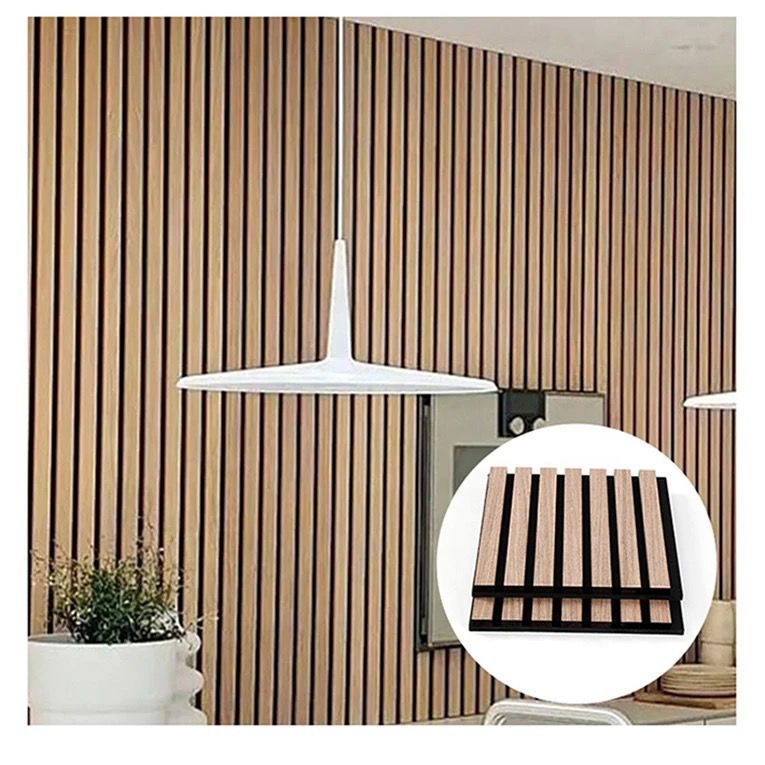
PVC wall panels deliver an unusually broad design range while preserving visual consistency across large surfaces. They’re manufactured in wood, stone, concrete, and metal looks—as well as solid colors, high-gloss, matte, and textured profiles—enabling the same product family to serve minimalist bathrooms, warm hospitality interiors, and high-traffic retail spaces without switching material systems.
This consistency is a distinct advantage over paint and wallpaper. Multi-batch paint can vary subtly in sheen and tone, and wallpaper seams or pattern misalignment disrupt sightlines. Factory-finished PVC panels are produced with tightly controlled color and texture matching, so adjacent panels read as a seamless, continuous surface—reducing visual noise and simplifying specification for architects and contractors.
Common design approaches include:
- Wood-look PVC panels for accent walls, wainscoting, and ceiling details
- Stone-look and concrete-look panels for feature walls and reception areas
- High-gloss and matte solid panels for clean commercial and healthcare interiors
- Textured or 3D panel profiles for depth without fragile decorative plaster
Because these panels don’t require repainting or re-papering to refresh a look, their original finish remains stable for years—maintaining aesthetic integrity through daily wear and routine cleaning. They also accept cutting and routing for custom layouts, enabling vertical, horizontal, or geometric patterns without the dry-time constraints and edge challenges common with painted or wallpapered feature walls.
FAQs About PVC Wall Panels
What makes PVC wall panels ideal for humid environments?
PVC panels are non-porous and feature a closed-cell structure that prevents water absorption, mold growth, and damage caused by moisture. This makes them highly effective in wet or steamy spaces.
How durable are PVC wall panels compared to paint or wallpaper?
Unlike paint or wallpaper, which can scratch, peel, and fade, PVC panels resist impacts, scratches, and discoloration. They are built to last 20–30 years with minimal maintenance, offering long-term cost savings.
Can PVC panels be installed over imperfect walls?
Yes, PVC panels can conceal cracks, minor holes, and uneven substrates without extensive drywall repair, providing a clean, uniform finish regardless of the underlying surface.
Are PVC wall panels easy to clean?
Yes, their smooth, non-porous surface resists stains, grease, and moisture. Only mild soap and water are needed for routine cleaning, making maintenance simple and efficient.
What aesthetic options are available for PVC wall panels?
PVC panels come in a variety of finishes, including wood, stone, concrete, metal, solid colors, high-gloss, matte, and textured designs. They are versatile enough to suit different design needs across residential and commercial spaces.